

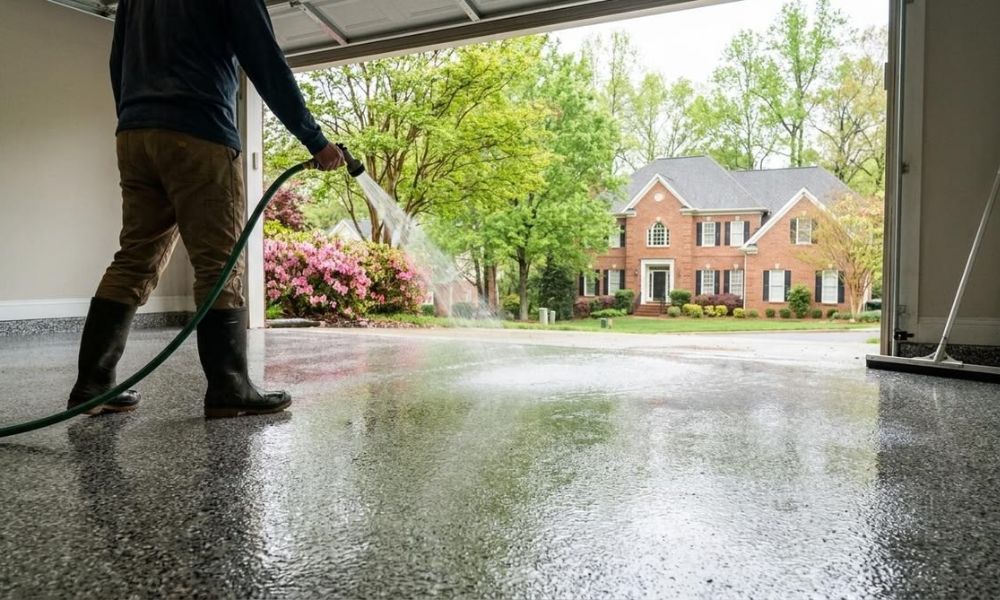
An epoxy garage floor is built to take a beating. It resists stains, shrugs off oil, and stays looking sharp far longer than bare concrete. Still, even the toughest coating needs a little care to keep that glossy, sealed finish. The good news? Cleaning one is simpler than most homeowners expect—as long as you use the right approach and skip the products that can dull or damage the surface.
This guide walks you through exactly how to clean an epoxy garage floor safely, remove common stains, and keep your coating looking new for years, with a few tips tailored to Maui’s humid, coastal conditions.
Quick Answer: How Do You Clean an Epoxy Garage Floor?
To clean an epoxy garage floor, move vehicles and loose items out of the way, then sweep or dust-mop the entire surface. Wipe up oil, grease, or spills promptly. Mop with warm water and a mild, pH-neutral cleaner. Rinse if needed, then let the floor dry completely. Avoid abrasive tools and harsh chemicals that can harm the coating.
What You Need to Clean an Epoxy Garage Floor
Gather a few basic supplies before you start. Most are things you likely already own:
- Soft-bristle broom or dust mop
- Microfiber mop
- Bucket
- Warm water
- Mild or pH-neutral cleaner
- Soft cleaning brush (never wire or steel)
- Clean towels or microfiber cloths
- An appropriate degreaser for stubborn oil or grease
One important note: the exact cleaning product you choose should be compatible with your specific coating system. Not every epoxy or polyaspartic finish reacts the same way to every cleaner, so always check the manufacturer’s care instructions before trying a new product.
Step-by-Step: How to Clean an Epoxy Garage Floor
Follow these five steps for a thorough, coating-safe clean.
1. Remove Vehicles and Loose Items
Clear the floor first. Pull out cars, move storage bins, and set aside tools or bikes. An empty garage is far easier to clean, and it lets you spot spills, tire marks, or areas of wear you might otherwise miss. This quick step also helps you catch small coating issues, like a chip or scratch, before they grow into something bigger.
2. Sweep Away Dirt, Sand, and Debris
Sweep the entire floor with a soft-bristle broom or dust mop. This matters more than it sounds. Loose grit and sand act like sandpaper underfoot and under tires, slowly wearing down the coating’s finish over time. In Maui, tracked-in beach sand and fine coastal dust are especially common, so regular dry sweeping is one of the easiest ways to protect your investment. Pay attention to corners and the areas where tires sit.
3. Treat Oil and Grease Spills
Wondering how to remove oil from an epoxy garage floor? Act fast. Blot fresh oil or grease with a paper towel or cloth—don’t smear it. For dried or stubborn spots, apply a small amount of a suitable degreaser, let it sit briefly according to the label, then gently wipe and rinse. Epoxy resists oil far better than porous concrete, so most spills lift with minimal effort. Avoid dumping harsh solvents on the surface hoping for faster results; unnecessary aggression can dull the finish.
4. Mop With a Mild Cleaning Solution
Fill your bucket with warm water and add a mild or pH-neutral cleaner, diluted to the label’s directions. pH-neutral cleaners are ideal because they lift dirt without the strong acids or bases that can etch or discolor a coating over time. Mop in sections with a microfiber mop, working from one end of the garage to the other. Refresh your water if it gets dirty so you’re not simply pushing grime around.
5. Rinse and Dry
For a light routine clean, mild cleaner and a damp mop are often enough. After a deeper clean, rinse with clean water to remove any leftover cleaning residue, which can leave a hazy film. Then dry the floor with a squeegee or towels. Don’t leave standing water sitting on the surface—especially in humid coastal climates, where trapped moisture and slow evaporation can encourage slippery spots and grime buildup.
How to Remove Common Stains From an Epoxy Garage Floor
Knowing how to remove stains from epoxy flooring comes down to matching the method to the mess.
- Oil and grease: Blot immediately, then treat with a compatible degreaser and rinse. Prompt cleanup is your best defense.
- Tire marks: Those dark scuffs respond well to a mild cleaner and gentle scrubbing with a soft brush. A degreaser can help on tougher marks.
- Dirt and mud: Let mud dry, sweep away the loose material, then mop the remaining film with warm water and mild cleaner.
- Food or beverage spills: Wipe up quickly with a damp cloth and mild soap. Sugary or acidic drinks are easy to remove when handled promptly.
- Chemical spills: Rinse promptly with water and clean gently. Never mix cleaning chemicals together, and follow your coating’s care guidance for anything unusual.
- Rust or mineral staining: These can be trickier. Try a mild approach first and avoid aggressive acids unless the manufacturer approves them. Persistent staining may need professional attention.
When in doubt, test any new cleaner on a small, hidden area first.
How Often Should You Clean an Epoxy Garage Floor?
Here’s a realistic epoxy floor maintenance schedule:
- Quick sweeping or dusting: As needed, ideally weekly, to keep abrasive grit off the surface.
- Spot cleaning: Immediately after any spill.
- Deeper mopping: Every one to three months, depending on use.
Traffic drives frequency. A busy home workshop exposed to sand, oil drips, and constant vehicle movement needs more attention than a lightly used residential garage. In Maui, where salt air and windblown sand are part of daily life, slightly more frequent sweeping keeps things easy to manage.
What Not to Use on Epoxy Garage Floors
Some products and tools do more harm than good. Avoid the following:
- Abrasive scouring pads
- Steel wool or wire brushes
- Extremely aggressive or acidic cleaners
- Unapproved solvents
- Harsh chemicals not recommended for your coating
- Excessive, forceful scrubbing
- Any tool that can scratch the surface
Abrasive pads and steel wool leave micro-scratches that gradually cloud the glossy finish. Harsh chemicals can etch, discolor, or weaken the coating. Before using any specialty cleaner, check the coating manufacturer’s recommendations—it’s the simplest way to avoid an expensive mistake.
How to Maintain an Epoxy Garage Floor Long Term
Cleaning epoxy floors is only part of the picture. A few habits will keep your surface performing for years:
- Clean spills promptly before they set.
- Sweep regularly to control sand and grit.
- Place mats under vehicles or workbenches where drips are likely.
- Avoid dragging heavy or sharp objects across the surface.
- Use furniture pads or dollies when moving equipment.
- Inspect the coating periodically for chips, peeling, or unusual wear.
- Address small problems early, before they spread.
Epoxy is a genuinely low-maintenance surface, but low maintenance doesn’t mean no maintenance. These durable epoxy and polyaspartic coatings reward a little consistent care with a long, good-looking life.
Why Epoxy Garage Floors Are Easy to Clean
A properly installed epoxy coating creates a smooth, sealed surface with no open pores for dirt and liquids to soak into. That’s why it wipes clean so easily compared to bare concrete, which absorbs oil and stains readily.
Maui Epoxy Solutions describes its garage epoxy flooring as a smooth, sealed surface that resists stains, moisture, oil, gas, and common garage chemicals while staying easy to maintain. That sealed finish also helps in Maui’s humid environment, where a non-porous surface handles moisture better than untreated concrete. Just remember that no coating is completely immune to every substance, so prompt cleanup still matters.
When Should You Call a Professional?
Regular cleaning handles most situations. But some issues call for expert evaluation rather than another round of mopping. Consider a professional if you notice:
- Peeling or delaminating coating
- Significant cracking
- Stains that won’t lift despite proper cleaning
- Widespread surface damage or wear
- Suspected moisture problems pushing up from below
- A floor that’s becoming hard to maintain despite good habits
These signs often point to something beneath the surface, like moisture intrusion or coating failure, that cleaning alone can’t fix. If you’re weighing options for a repair or a new floor, comparing your garage floor epoxy choices with a professional helps you pick the right system for your space.
FAQs About Cleaning Epoxy Garage Floors
What is the best cleaner for an epoxy garage floor?
A mild, pH-neutral cleaner mixed with warm water is usually the best cleaner for epoxy garage floors. It lifts dirt without the harsh acids or bases that can dull or etch the coating. Always confirm the product suits your specific system.
Can you mop an epoxy garage floor?
Yes. A microfiber mop with warm water and a mild cleaner is one of the easiest and safest ways to clean the surface. Avoid soaking the floor or leaving standing water behind.
Can you use vinegar on an epoxy garage floor?
It’s best to avoid it. Vinegar is acidic, and repeated use may gradually dull the finish. A pH-neutral cleaner is a safer, more reliable choice for routine cleaning.
How do you remove oil from an epoxy garage floor?
Blot fresh oil immediately, then apply a compatible degreaser to any remaining residue, let it sit briefly, and rinse. Because epoxy is non-porous, most oil lifts easily when handled promptly.
How often should you clean an epoxy garage floor?
Sweep weekly, spot-clean spills right away, and mop every one to three months. Busy workshops or garages exposed to sand and traffic may need more frequent cleaning.
Can you pressure wash an epoxy garage floor?
In many cases you can, but use a moderate setting and check your coating manufacturer’s guidance first. Excessive pressure can damage edges or worn areas.
How do you keep an epoxy garage floor looking new?
Sweep regularly, clean spills quickly, use mats where drips occur, and avoid abrasive tools. Consistent, gentle epoxy garage floor care preserves the finish for years.
Keeping your floor in top shape is mostly about good habits and gentle products. If you’d like professional advice, maintenance guidance, or an evaluation of your current garage floor, the team at Maui Epoxy Solutions can help. You can also explore how different systems compare in their guide to the best garage floor coating for Maui homes to make an informed choice for your space.