

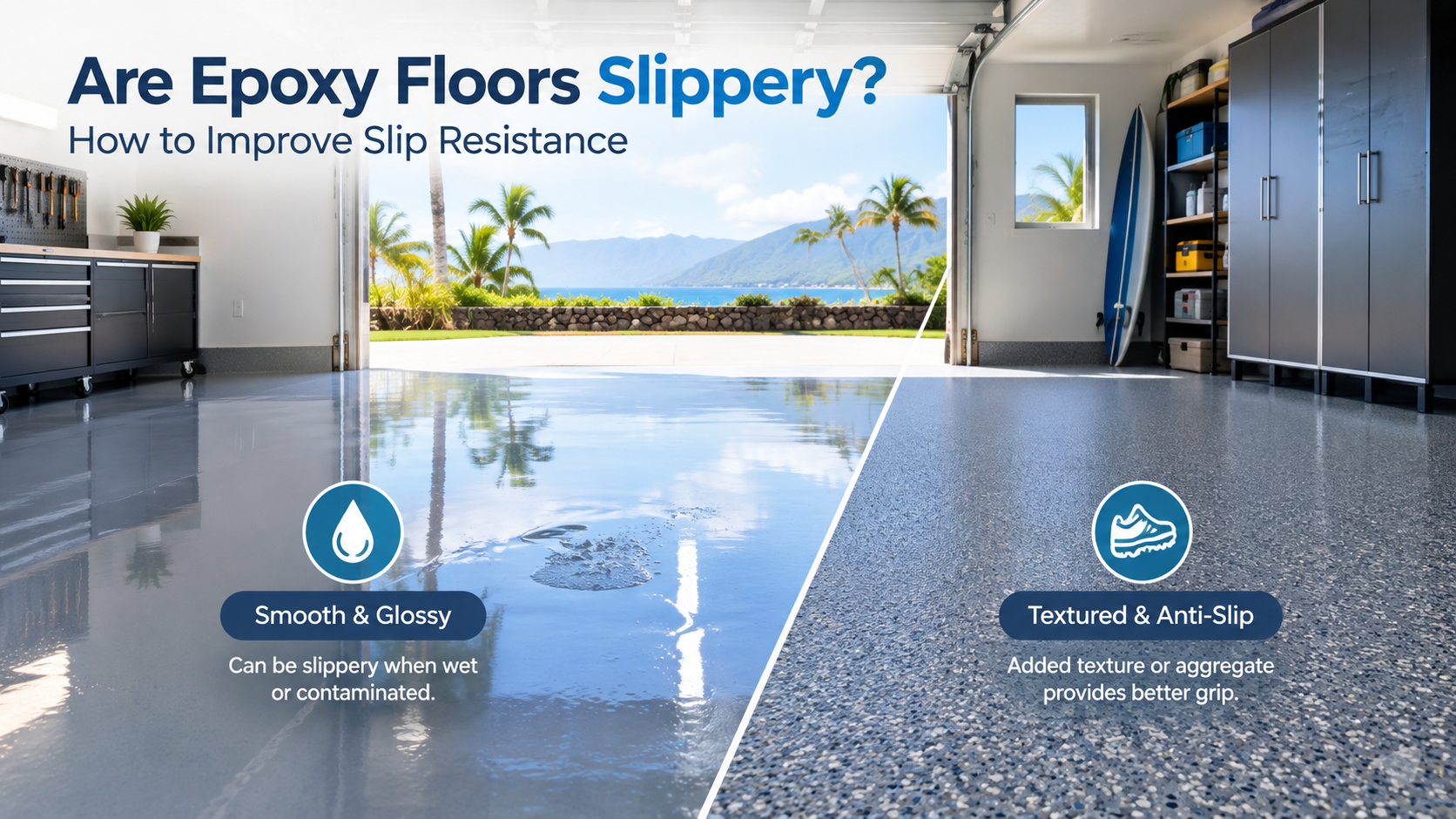
Worried that a new epoxy floor might turn your garage or shop into a skating rink? You’re not alone. It’s one of the most common questions people ask before investing in this kind of flooring.
Here’s the short answer: epoxy floors are not automatically slippery. A well-designed epoxy floor can offer solid traction. But a smooth, glossy epoxy surface can feel slick when it’s wet or covered with oil, dust, or the wrong cleaning residue. Traction depends on the coating system, the finish, texture, contaminants, moisture, footwear, and how you maintain the floor.
If you’re weighing your options for a garage, home, workshop, or commercial space, it helps to talk with an experienced team. You can learn more about professional epoxy flooring solutions to match the right finish to your space.
Key Takeaway
- Epoxy floors are not inherently slippery.
- A smooth epoxy finish can get slick when wet or coated with oil, dust, or soap residue.
- Anti-slip additives and textured finishes improve traction and safety.
- The right choice depends on your environment, use, and maintenance routine.
- For high-traffic or wet areas, ask a professional for a slip-resistant epoxy flooring system.
Are Epoxy Floors Slippery?
Not by default. Epoxy is a durable resin coating applied over concrete. On its own, a cured epoxy surface has a smooth, hard finish. Dry and clean, that surface usually gives reasonable grip for everyday walking.
The reason people worry about a slippery epoxy floor comes down to two things: gloss and moisture. A high-gloss finish looks great and is easy to clean, but a smooth glossy surface offers less friction once liquid gets on it. That’s true of many hard floors, not just epoxy.
The good news is that traction is something you can control. Installers can build slip resistance directly into the system with the right additives and finish. So the real question isn’t “are epoxy floors slippery?” It’s “which epoxy finish fits how I use the space?”
What Makes an Epoxy Floor Slippery?
Several factors affect epoxy floor traction. Most of them come down to what’s on the surface and how smooth that surface is.
- Water and moisture: A thin film of water on a smooth finish is the biggest culprit. It reduces friction fast.
- Oil and grease: Common in garages and workshops. Oily residue makes any hard floor slick.
- Dust and dirt: Fine dust acts like tiny ball bearings underfoot, especially on glossy coatings.
- Smooth, high-gloss finishes: More shine often means less grip when contaminants are present.
- Incorrect cleaning practices: Some soaps leave a slippery film. Rinsing poorly makes it worse.
- Footwear: Smooth-soled shoes or bare feet grip less than rubber-soled work boots.
- Poorly matched coating systems: A finish chosen for looks alone may not suit a wet or high-traffic area.
Understanding these factors helps you plan the right floor from the start.
Are Epoxy Floors Slippery When Wet?
A wet epoxy floor with a smooth finish can be slippery, yes. Water lowers friction between your shoe and the surface. That matters most in spaces that see regular moisture, such as:
- Garages where cars drip rain or snowmelt
- Entryways and mudrooms
- Workshops with wash-down zones
- Kitchens and food-prep areas
- Commercial spaces with foot traffic and spills
This is exactly why finish selection matters. A smooth, glossy coating in a wet area raises the risk. A textured or anti-slip epoxy coating in that same spot gives your feet something to grip, even when the floor is damp. If your space gets wet often, plan for traction before installation rather than trying to fix it later.
How to Make Epoxy Floors Less Slippery
You have several practical ways to boost epoxy floor traction. No single option works for every floor, so match the solution to your space and how you use it.
Add anti-slip aggregates
Installers can mix fine additives, such as silica, aluminum oxide, or polymer grit, into the topcoat. These create micro-texture that improves grip. The finer the grit, the subtler the feel; coarser grit adds more traction for demanding areas.
Choose a textured finish
A textured or matte finish scatters light and adds surface roughness. It hides minor wear and offers better footing than a mirror-gloss coat.
Use broadcast materials
Broadcasting media, such as decorative flakes or quartz, into the coating adds both texture and visual interest. Quartz systems in particular are popular where slip resistance and durability both matter.
Prioritize surface preparation
Good traction starts under the surface. Proper concrete prep and correct application help the coating bond and perform as designed. Rushed prep can lead to failures that affect safety over time.
Match the system to the environment
A showroom floor and a wash-down workshop need different systems. Pick a coating built for the conditions it will face.
Rely on professional installation
An experienced installer can recommend the right grit level and finish, then apply it evenly. Uneven additives create inconsistent grip, so skilled application matters.
Keep it clean
Even the best slip-resistant epoxy flooring loses grip under a layer of dust or grease. Regular cleaning keeps traction where it should be.
Are Epoxy Floors Safe for Garages and Commercial Areas?
Yes, epoxy floors can be a safe, practical choice for both, as long as the finish fits the space. Epoxy is tough, easy to clean, and resistant to stains and chemicals, which is why so many garages and businesses use it.
For epoxy floor safety in busy or wet settings, the key is choosing an appropriate slip-resistant finish. Areas exposed to water, oil, chemicals, heavy traffic, or demanding work conditions often need a system built for higher traction. A plain glossy coat may look sharp in a clean, dry showroom, but a textured, anti-slip system usually serves a working garage or commercial kitchen better.
Talk through your daily use with a professional. Details like drainage, foot traffic, forklift use, and spill frequency all shape the right recommendation.
How to Maintain an Epoxy Floor for Better Traction
Good epoxy flooring maintenance keeps your floor safe and looking its best. Traction fades when grime builds up, so a simple routine goes a long way.
- Clean spills promptly. Wipe up water, oil, and grease before someone slips.
- Sweep and dust regularly. Fine dust reduces grip, especially on smooth finishes.
- Use suitable cleaning methods. Stick to a gentle cleaner and mop, then rinse well so no slick film remains.
- Avoid oily or greasy residue. Some cleaners and floor treatments leave a slippery layer. Skip anything that coats the surface.
- Follow the manufacturer’s care guidance. Product-specific advice protects both the finish and its slip resistance.
- Inspect for wear. Check high-traffic zones for thinning texture or damage, and address it before it becomes a hazard.
A little consistency keeps your epoxy floor finish performing the way it was designed to.
Frequently Asked Questions
Are epoxy floors slippery?
Not inherently. A dry, clean epoxy floor offers reasonable grip. A smooth, glossy finish can feel slick when wet or dirty, which is why textured and anti-slip options exist.
Are epoxy floors slippery when wet?
A smooth epoxy surface can be slippery when wet because water lowers friction. Adding an anti-slip additive or textured finish reduces that risk in moisture-prone areas.
Can you add texture to epoxy flooring?
Yes. Installers can add anti-slip aggregates or broadcast materials like quartz or flakes into the coating to create texture and improve traction.
What makes epoxy flooring slip-resistant?
Surface texture is the main factor. Anti-slip aggregates, matte or textured finishes, and broadcast media all increase grip compared with a plain high-gloss coat.
How do you clean an epoxy floor safely?
Sweep away dust, mop with a gentle cleaner, and rinse thoroughly so no slippery film remains. Wipe spills quickly and follow the manufacturer’s care recommendations.
Are epoxy floors suitable for garages?
Yes. Epoxy is durable and easy to clean, which suits garages well. For grip against water and oil, choose a slip-resistant finish designed for that use.
Can old epoxy floors be made more slip-resistant?
Often, yes. A professional can add a new textured topcoat with anti-slip aggregate over a sound existing floor. The surface must be properly prepared first.
Final Thoughts
So, are epoxy floors slippery? Not by nature. A smooth epoxy surface can have reduced traction when it’s wet or covered with oil, dust, or cleaning residue. But with the right finish, careful installation, and a simple maintenance routine, you can enjoy a floor that’s both good-looking and safe underfoot.
The smartest move is to match the coating system to how you’ll actually use the space. Dry showroom or wash-down workshop, quiet home garage or busy commercial floor, each calls for a different approach to traction.
If you want a floor built with safety in mind, reach out to an experienced team for professional epoxy flooring solutions tailored to your space. A quick conversation about your environment can help you choose a slip-resistant system with confidence, so your floor works for you for years to come.