Heavy-duty, seamless concrete floor coatings built for forklifts, machinery, spills, and Maui's humid coastal climate. Specified for how your facility actually operates.
Industrial floors take a beating every day: heavy equipment, forklift traffic, chemical spills, moisture, and nonstop foot traffic. Unprotected concrete eventually cracks, stains, dusts, and wears out early. Our industrial epoxy flooring in Maui gives your concrete a tough, seamless protective layer designed for demanding commercial and industrial work.
From concrete preparation to choosing the right coating system, we help Maui warehouses, manufacturers, workshops, kitchens, and distribution centers get floors that last, clean easily, and keep operations moving.
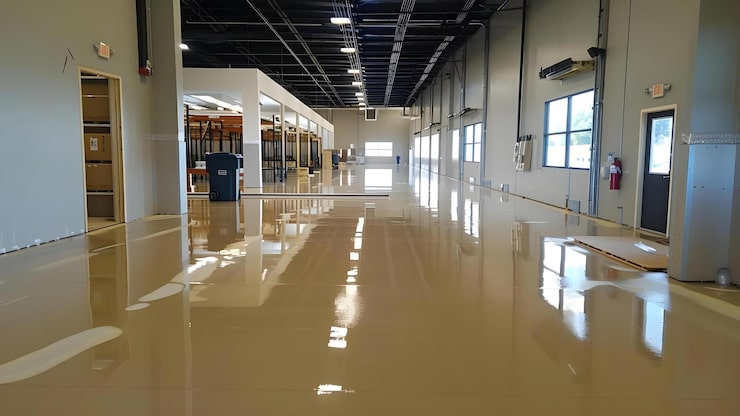
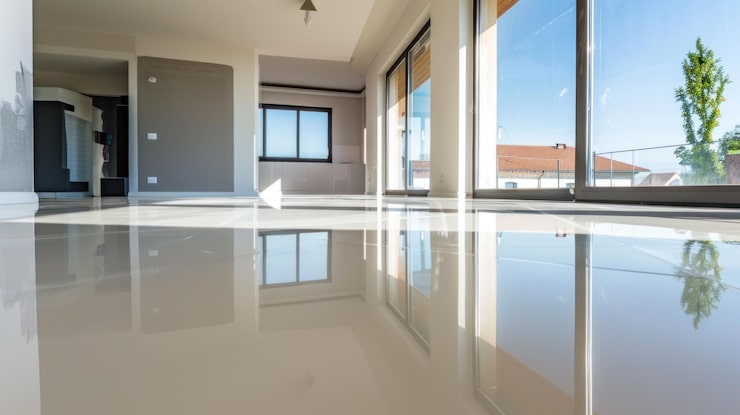
Industrial epoxy flooring is a resin-based coating system applied over properly prepared concrete. The epoxy resin and hardener react chemically to form a hard, protective surface that bonds tightly to the slab.
Unlike ordinary floor paint, a professionally specified industrial epoxy floor coating delivers far better abrasion resistance, easier cleaning, and protection against many common chemicals.
Maui's coastal humidity and busy commercial operations are hard on concrete. The right epoxy system pays you back in five key ways.
Protects concrete from abrasion, foot traffic, wheeled carts, and mechanical wear. High-build systems are available for the toughest environments.
Resists oils, lubricants, grease, and cleaning products. We match the formulation to the actual chemicals, concentrations, and exposure times in your facility.
A smooth, non-porous, seamless surface stops concrete dusting and spill absorption, with fewer joints for dirt to collect in.
Quartz or aggregate textures add traction in wet and high-traffic zones. Pair them with good drainage and housekeeping for the safest results.
A protective barrier against contamination and daily wear that helps reduce how often you need costly concrete repairs.
Light-reflective finishes and color-coded safety lines and zones help keep production areas clean, bright, and well organized.
Every facility needs a different thickness, texture, and level of protection. We recommend the system that fits your loads, exposures, and maintenance routine.
Thicker protective layers than standard thin-film coatings, ideal for warehouses, mechanical rooms, and manufacturing floors that need strong abrasion resistance.
A smooth, continuous, easy-to-clean finish for labs, production areas, and commercial buildings.
Very uneven slabs may need leveling or repair first.
Resin combined with graded aggregates for a very heavy-duty floor, suited to equipment areas, high-impact zones, and rehabilitating damaged concrete.
Textured finishes for wet workspaces, loading docks, and kitchens. Aggregate type and spread are tuned to balance grip with cleanability.
Specialized formulations for facilities handling oils, cleaning agents, and industrial chemicals.
For aggressive acids, solvents, or prolonged exposure, we may recommend an alternative resin system.
Polyurethane or polyaspartic topcoats over epoxy for areas with strong sunlight, open bay doors, or where long-term color stability matters.
Warehouse floors handle pallet movement, racking, forklifts, and constant traffic. Industrial epoxy reduces concrete dusting and creates a clean, durable surface. We design the coating around turning wheels, concentrated rack loads, and your forklift traffic patterns.
Production floors face vibration, spills, impacts, and continuous movement. Heavy-duty epoxy systems protect the concrete while keeping your production space organized and easy to maintain.
Motor oil, lubricants, tire traffic, and degreasers are part of daily work. The right epoxy resists staining and makes spill cleanup quick. We also check chemical compatibility and hot-tire pickup resistance during product selection.
Food facilities need floors that support frequent cleaning and good hygiene. Seamless resin flooring with integral coved edges makes sanitation easier. Where hot-water washdowns or thermal shock occur, cementitious urethane is often the better choice, and we'll tell you when it is.
Equipment rooms, stockrooms, maintenance shops, and storage spaces benefit from coatings that control dust and simplify upkeep. We review how each space is used before recommending a system.
Humidity, moisture moving up through the slab, salt air, and strong sun all affect how a coating performs. We plan for each one.
Excess slab moisture can cause blistering, delamination, and coating failure. We test moisture conditions and compare results with the manufacturer's limits before coating.
Facilities near the coast deal with salt-laden moisture and surface contamination. The right system protects the concrete, supported by good drainage and regular cleaning.
Standard epoxy can yellow (amber) in sustained sunlight. A compatible UV-resistant polyurethane or polyaspartic topcoat keeps color stable. Exterior use is confirmed for the full system.
A reliable industrial floor starts with careful planning and thorough concrete preparation.
We evaluate floor condition, use, traffic patterns, and exposure risks to decide if repairs, moisture testing, or extra prep are needed.
Diamond grinding, shot blasting, old-coating removal, and deep cleaning to reach the profile the manufacturer specifies for strong adhesion.
Cracks, joints, holes, and damaged areas are repaired with materials suited to the concrete. Active structural movement is assessed separately.
When specified, an epoxy primer is chosen for the slab's porosity, moisture, and system compatibility to maximize bonding.
The selected system is installed to product specs, with multiple coats, aggregate broadcasts, or build layers as needed.
We inspect finish, coverage, and thickness. Foot traffic, equipment, and chemical exposure each have their own cure times.
Cost varies widely because every facility is different. The main pricing factors are:
A properly specified, installed, and maintained industrial epoxy floor can deliver many years of service. Lifespan depends on traffic intensity, coating thickness, impacts, cleaning practices, slab stability, and chemical contact. A lightly used storage room will wear far more slowly than a busy warehouse with constant forklift traffic.
Regular inspections and quick repairs stop small damage from spreading. In heavy-use facilities, scheduled maintenance or recoating keeps protection at the level you need.
| Feature | Industrial Epoxy | Polished Concrete | Urethane Cement |
|---|---|---|---|
| Best for | Warehouses, workshops, manufacturing | Dry, high-traffic retail & warehouse floors | Food processing, washdown kitchens |
| Chemical & stain resistance | Good for many common chemicals | Low; oils and acids can stain | High |
| Hot water & thermal shock | Limited | Good (no coating) | Excellent |
| Sunlight / UV | Can yellow without UV topcoat | Not affected | May change color; mainly for interiors |
| Surface | Seamless coated film, gloss or textured | Densified concrete, no coating | Thick, textured, heavy-duty |
General comparison only. Final recommendations depend on your facility's loads, exposures, and maintenance plan.
Industrial flooring is a long-term operational investment, and the right choice takes more than picking a color or gloss level. We match the specification to how your business actually runs.
Yes. Properly engineered industrial epoxy systems handle many heavy-duty environments. Performance depends on equipment weight, wheel loads, concrete strength, and the coating specification.
An intact epoxy coating resists surface water. However, it is not automatically a full waterproofing or moisture-mitigation system. Joints, cracks, drainage, and slab moisture need separate attention.
Yes, as long as the concrete is structurally sound and can be properly prepared. Contamination, damaged areas, and excess moisture must be addressed first.
It depends on the product, thickness, temperature, and humidity. Some systems allow light foot traffic in about 24 hours, while heavy equipment or chemical exposure may need several days. We always follow the manufacturer's instructions.
Often, yes. We can work in phases, after hours, or around equipment moves so parts of your facility stay operational during installation.
Epoxy generally gives stronger protection against chemicals and staining, while polished concrete has no film coating and can suit dry, high-traffic areas. The better choice depends on your facility's needs, maintenance, and exposures.
Yes. Textured aggregates and compatible finishes improve traction. The right texture depends on wet conditions, footwear, cleaning methods, and applicable safety requirements.
Worn, stained, or hard-to-clean concrete? Get a professional assessment and a customized, no-obligation quote for industrial epoxy flooring in Maui, HI.