

What Is the Best Way to Clean Epoxy Painted Floors?
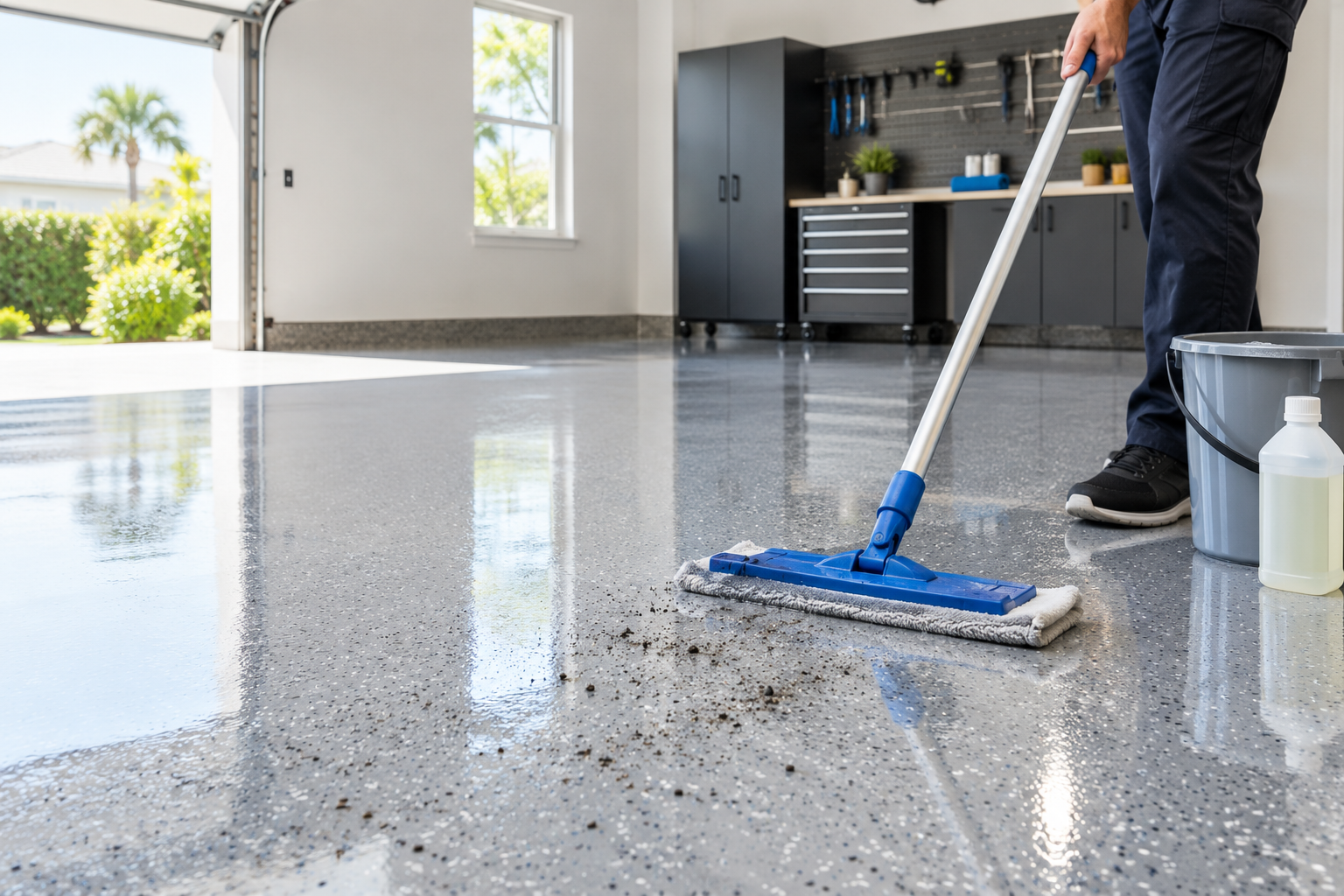
The best way to clean epoxy painted floors is to sweep or dust mop away loose dirt, spot-clean spills quickly, then mop with a mild, non-abrasive cleaner diluted per the label. Rinse if needed, remove standing water, and let the floor dry. Skip harsh chemicals and rough scrubbing pads.
Epoxy floors have become a favorite for garages, homes, patios, and busy commercial spaces because they look sharp and hold up well. A properly installed coating resists stains, wear, and moisture, which is a big reason it fits island living so well. If you want professional epoxy flooring solutions in Maui, it helps to first understand how simple day-to-day care keeps that finish looking new.
This guide walks you through routine cleaning, deep cleaning, oil removal, outdoor care, and the common mistakes to avoid.
What You Need to Clean an Epoxy Floor
You don’t need fancy tools. A basic kit works for most homes and businesses:
- Soft-bristle broom or dust mop
- Microfiber mop
- Bucket with clean water
- A mild, non-abrasive cleaner (a little dish soap and water works for many floors)
- Soft cloths or sponges
- A squeegee for outdoor or larger areas
Avoid abrasive scouring pads, steel wool, and stiff wire brushes. These can scratch or dull the finish over time. Harsh scrubbing may also wear down the topcoat, so gentle and consistent care beats aggressive cleaning.
Step-by-Step Guide to Cleaning Epoxy Painted Floors
1. Remove Dirt and Loose Debris
Start dry. Sweep or use a dust mop to pick up dust, sand, and grit. This step matters more than people think. Loose grit acts like sandpaper when it gets dragged across the surface, so removing it first protects the coating.
For garages and outdoor floors, do this often. Sand and fine dirt build up quickly near open doors and driveways.
2. Spot-Clean Spills Quickly
Wipe up spills as soon as you notice them. Food, mud, drinks, oil, and grease are easier to clean when fresh. Use a soft cloth and a little mild soapy water for most messes.
The longer a spill sits, the more likely it is to stain or leave a mark, so quick action keeps your floor looking clean.
3. Mop With a Mild Cleaning Solution
Mix a mild cleaner with water, following the product label for the right dilution. Too much cleaner leaves a filmy residue that dulls the shine.
Mop in sections using a microfiber mop. Work with the grain of any pattern and don’t flood the floor with water.
4. Rinse When Necessary
If you used a stronger cleaner or the floor feels slick, rinse with clean water. Leftover residue can leave the surface dull or slightly sticky, which also attracts more dirt.
5. Let the Floor Dry
Remove standing water with a clean mop or squeegee. Let the floor air dry, and open doors or windows for airflow when you can. Good ventilation speeds drying and helps in humid conditions.
How to Deep Clean an Epoxy Floor
Deep cleaning is worth doing a few times a year, or when dirt builds up in corners and textured areas. Here’s a reliable approach:
- Sweep or vacuum to remove all loose debris first
- Apply a suitable mild cleaner mixed per the label
- Work in manageable sections so cleaner doesn’t dry on the surface
- Use a soft brush or soft-bristle deck brush for textured or slip-resistant spots
- Rinse thoroughly with clean water
- Remove standing water and let everything dry fully
Heavily used commercial floors or spaces exposed to industrial contaminants may need specialized cleaning methods. When in doubt, check the coating manufacturer’s care instructions.
How to Remove Oil and Grease From Epoxy Floors
Garages and shops see plenty of oil drips and grease. The good news: epoxy resists these better than bare concrete.
- Blot fresh oil right away with paper towels or a cloth
- Apply a mild degreasing soap mixed with warm water
- Gently wipe or use a soft brush, without hard scrubbing
- Rinse the area and dry it
Address oil promptly. Sitting oil is harder to remove and can affect the look of the finish. Avoid grinding away at the spot with abrasive pads, since that can damage the topcoat.
What Cleaners Should You Avoid on Epoxy Floors?
Unless your coating manufacturer specifically approves them, it’s smart to avoid:
- Abrasive cleaners and scouring powders
- Scouring pads, steel wool, and stiff wire brushes
- Extremely harsh or highly acidic chemicals
- Solvents not approved for your coating
- Products that leave heavy residue
- Aggressive mechanical scrubbing
Compatibility depends on your specific epoxy or polyaspartic system, its finish, age, and condition. What’s fine for one floor may not suit another, so no single product is universally safe for every coating.
Can You Use Vinegar or Bleach on Epoxy Floors?
This is a common question, and the honest answer is: it depends.
Vinegar is acidic, and bleach is a strong chemical. Whether either is safe for your floor depends on the coating system, the concentration, how long it sits, and the manufacturer’s guidance. Some finishes tolerate diluted solutions; others may dull or react.
Rather than assuming household products are automatically safe, follow the coating manufacturer’s care instructions. Never mix cleaning chemicals together, as this can create dangerous fumes. When unsure, a mild soap-and-water solution is the reliable choice.
How Often Should You Clean Epoxy Painted Floors?
Frequency depends on the space and how much it’s used. A rough guide:
- Light residential use: Sweep weekly, mop every week or two
- Busy garages: Sweep often, spot-clean spills right away, mop monthly or as needed
- Commercial spaces: Clean based on foot traffic, spills, and daily operations
- Outdoor floors, patios, lanais, and pool decks: Clean more often, since they collect dirt, rain, salt, and debris
There’s no single schedule that fits every floor. Watch how yours looks and adjust.
Why Regular Cleaning Matters in Maui
Island conditions can be tough on surfaces. Between strong sun, frequent rain, humidity, and salt air, outdoor and coastal-facing floors gather grime faster than you might expect. Not every property faces the same conditions, but homes near the coast or with open lanais often see more salt and dust.
Regular sweeping and rinsing help clear salt residue and dirt before they settle in. This simple habit keeps patios, pool decks, and garage floors looking fresh through changing weather.
Common Mistakes When Cleaning Epoxy Floors
Avoid these frequent slip-ups:
- Letting oil, grease, or chemicals sit for too long
- Using abrasive tools or scouring pads
- Adding too much cleaner, which leaves residue
- Skipping the rinse and leaving a filmy surface
- Ignoring textured or slip-resistant sections where dirt hides
- Scrubbing aggressively
- Using chemicals your coating manufacturer hasn’t approved
- Forgetting to check manufacturer recommendations
How to Keep Epoxy Floors Looking New for Longer
Professionally installed epoxy and polyaspartic coatings are built to be durable and easy to care for. Still, consistent maintenance preserves that fresh look. A few practical habits:
- Sweep regularly to keep grit off the surface
- Wipe spills as they happen
- Place mats at entry points to catch dirt and water
- Rinse outdoor floors after heavy rain or salt exposure
- Avoid dragging heavy, rough objects across the coating
Small, steady efforts do more for your floor than occasional deep scrubs.
When Should You Contact a Professional?
Cleaning solves surface dirt, but it can’t fix structural coating problems. Reach out for a professional assessment if you notice:
- Peeling or flaking
- Bubbling
- Cracking
- Significant discoloration
- Persistent stains that won’t lift
- Coating damage or loss of adhesion
- Extensive wear across the surface
These issues point to the coating itself, not just dirt. Cleaning won’t repair them, so a professional evaluation is the right next step.
As an experienced Maui epoxy flooring provider, Maui Epoxy Solutions works with garages, homes, commercial spaces, patios, lanais, and pool decks built for island weather. If your floor shows wear or damage, or you’re planning a new coating, you can learn more about durable, easy-to-maintain epoxy and polyaspartic flooring in Maui and request a consultation.
Frequently Asked Questions
What is the best cleaner for epoxy painted floors?
A mild, non-abrasive cleaner works well for most epoxy floors. Many owners use a little dish soap mixed with warm water. Avoid abrasive or overly harsh products unless your coating manufacturer approves them. Always dilute per the label and rinse if residue builds up, since leftover film can dull the finish.
Can I mop an epoxy floor?
Yes. Mopping is one of the easiest ways to clean epoxy. Use a microfiber mop with a mild cleaning solution and don’t flood the floor with water. Mop in sections, rinse if needed, then remove standing water and let it dry. Regular mopping keeps the surface looking clean and bright.
How do I remove oil from an epoxy garage floor?
Blot fresh oil with a cloth or paper towels first. Then apply a mild degreasing soap with warm water, wipe gently, rinse, and dry. Handle oil promptly, since it’s harder to remove once it sits. Skip abrasive pads or heavy scrubbing, which can wear down the topcoat.
Can I use vinegar to clean epoxy flooring?
It depends on your specific coating. Vinegar is acidic, and its safety varies with concentration, exposure time, and the finish. Some floors tolerate a diluted solution, others may dull. Follow your coating manufacturer’s care instructions instead of assuming it’s safe, and never mix cleaning chemicals together.
How often should epoxy floors be cleaned?
It varies by use. Light home floors may need sweeping weekly and mopping every week or two. Busy garages and commercial spaces need more frequent care. Outdoor floors, patios, and pool decks exposed to rain, dirt, and salt air usually need cleaning more often. Watch your floor and adjust as needed.
What should I avoid when cleaning epoxy floors?
Avoid abrasive cleaners, scouring pads, steel wool, and harsh chemicals unless the manufacturer approves them. Don’t use too much cleaner, skip the rinse, or scrub aggressively. Also avoid unapproved solvents and mixing chemicals. Gentle, consistent cleaning protects the coating far better than harsh methods.
How do I deep clean an epoxy floor?
Sweep or vacuum first, then apply a mild cleaner and work in sections. Use a soft brush for textured or slip-resistant areas, rinse thoroughly, and remove standing water before drying. Do this a few times a year, or more for heavy-use and outdoor floors that collect extra dirt and salt.