

Your patio is more than just a slab of concrete outside your back door. It’s where summer evenings happen, where guests gather, and where memories get made. The right flooring turns that space from an afterthought into the centerpiece of your home’s outdoor experience.
Choosing from today’s patio flooring ideas means balancing looks, durability, safety, and budget. Here’s what you need to know before making a decision:
- Modern coatings and materials offer better performance than ever before
- The right choice depends on your climate, usage, and lifestyle
- Professional installation can dramatically extend the life of any surface
- 2026 trends lean toward seamless, resort-inspired, low-maintenance designs
Why Patio Flooring Matters for Outdoor Entertainment Areas
Flooring isn’t just a visual choice — it shapes how your entire outdoor space functions.
Comfort for guests starts underfoot. Hard, uneven, or cracked surfaces create an uncomfortable experience and send guests indoors early. Smooth, well-finished flooring keeps people relaxed and lingering longer.
Visual appeal sets the tone. Your patio floor is one of the largest visible surfaces in your outdoor space, so it anchors every design decision around it — from furniture to lighting to landscaping.
Safety and slip resistance matter especially around pool decks and outdoor kitchens, where water and food spills are common. Many modern coatings and tile options include textured finishes specifically rated for wet conditions.
Weather durability is non-negotiable. Freeze-thaw cycles, UV exposure, and heavy rain can destroy the wrong surface within a few seasons. Materials that handle thermal expansion and moisture properly last decades instead of years.
Property value enhancement is a real benefit. A well-designed patio with quality flooring consistently increases home appeal and resale value.
Top Modern Patio Flooring Ideas for 2026
Decorative Concrete Flooring
Decorative concrete remains one of the most versatile patio flooring ideas available. It can be tinted, textured, polished, or overlaid to create a wide range of finishes — from smooth modern slabs to rustic stone looks.
It’s also cost-effective. Compared to natural materials, decorative concrete delivers a high-end appearance at a fraction of the cost. Maintenance is straightforward: periodic sealing every two to three years keeps it protected and looking sharp.
Epoxy Patio Flooring
Epoxy coatings create a seamless, glossy surface that resists stains, chemicals, and abrasion. UV-resistant epoxy formulas have improved significantly for outdoor use, reducing the yellowing and peeling that older versions were known for.
Epoxy works best on covered patios, garage conversions, and outdoor entertainment areas with overhead protection. It’s easy to clean, highly durable, and available in a wide range of colors and flake systems that add both texture and visual depth.
Polyaspartic Patio Coatings
Polyaspartic is one of the fastest-growing patio flooring solutions in 2026. It installs and cures in as little as one day, which means your patio is back in use almost immediately.
It offers exceptional resistance to UV rays, temperature swings, and moisture — making it a strong choice for exposed outdoor spaces. Polyaspartic also holds up better than standard epoxy in direct sunlight, making it ideal for pool decks and open entertainment areas without shade coverage.
Natural Stone Flooring
Few materials match the premium aesthetic of natural stone. Travertine, bluestone, slate, and flagstone all remain popular choices for upscale patio designs. Each piece is unique, giving your outdoor space a crafted, timeless appearance.
The trade-off is maintenance. Natural stone needs sealing to resist staining and moisture infiltration, and some varieties are susceptible to cracking in severe freeze-thaw cycles. In the right climate, though, a well-maintained stone patio can last a lifetime.
Porcelain Outdoor Tiles
Porcelain tiles have become a top choice for modern patio flooring ideas, especially in warmer climates. They’re available in large-format sizes that create clean, contemporary lines, and many are designed to mimic marble, wood, or concrete.
Outdoor porcelain is manufactured to be slip-resistant and frost-resistant, making it a practical as well as beautiful choice. The dense, non-porous surface requires minimal maintenance and holds up well against staining and UV fading.
Stamped Concrete Patios
Stamped concrete is the budget-friendly path to a luxury look. Patterns pressed into freshly poured concrete can replicate cobblestone, brick, slate, or wood planks with impressive realism.
It’s a strong option for homeowners who want a custom patio design without the cost of premium materials. Keep in mind that stamped concrete benefits from a protective sealer applied every two to three years, and surface cracks — while repairable — can be more visible than on plain concrete.
Quartz Flooring Systems
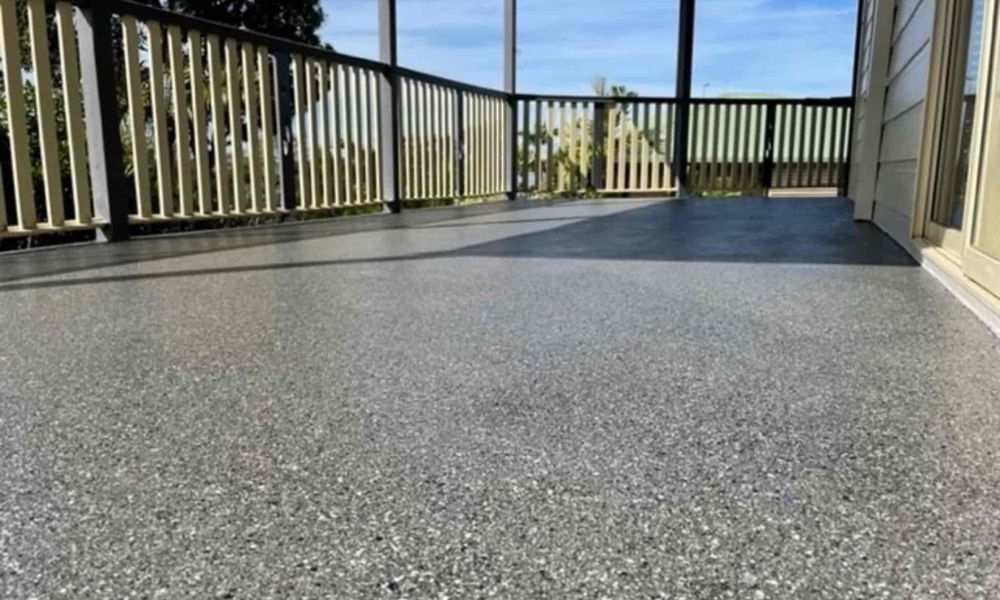
Quartz broadcast flooring systems combine a resin binder with colored quartz aggregate to create a highly durable, decorative surface. The result is a textured, slip-resistant finish that works particularly well around pool decks and outdoor entertainment areas.
Quartz systems require very little maintenance beyond occasional washing. The surface doesn’t require waxing or resealing in the same way as some other coatings, and it resists UV fading, chemicals, and heavy foot traffic effectively.
How to Choose the Right Patio Flooring
The best patio flooring for your home depends on several factors working together.
- Climate: Areas with harsh winters need freeze-thaw resistant materials like frost-rated porcelain or sealed concrete. Hot, sunny climates benefit from UV-stable coatings like polyaspartic or quartz systems.
- Usage frequency: High-traffic areas, outdoor kitchens, and pool decks need surfaces rated for heavy use and moisture exposure.
- Maintenance expectations: If you want minimal upkeep, polyaspartic coatings and porcelain tile require the least regular attention.
- Budget: Decorative concrete and stamped concrete offer the strongest value, while natural stone and premium tile sit at the higher end.
- Design preferences: Match your flooring to the architectural style of your home and the overall feel you want — modern, rustic, resort-inspired, or transitional.
Popular Patio Design Trends for Outdoor Entertainment Spaces
The way people use outdoor spaces has shifted. Indoor-outdoor living concepts now drive most patio renovation decisions, with homeowners investing in spaces that function as true extensions of the interior.
Minimalist modern aesthetics — clean lines, neutral tones, large-format surfaces — dominate 2026 design conversations. Multi-functional gathering areas that accommodate dining, lounging, and outdoor cooking are increasingly common.
Luxury resort-inspired patios with seamless flooring, integrated lighting, and premium coatings are the top aspiration. At the same time, sustainable material choices — recycled content tiles, low-VOC coatings, permeable surface options — are gaining serious traction with environmentally minded homeowners.
Benefits of Professional Patio Floor Coatings
A professionally installed coating does more than look good. It protects the underlying substrate, reduces long-term repair costs, and ensures the surface performs as expected under real outdoor conditions.
Professional application means proper surface preparation — which is where most DIY projects fail. Without adequate prep, even the best coatings peel, bubble, or fail prematurely. Professionals also apply the correct thickness and use commercial-grade materials not available at retail.
The return on investment is strong. A quality patio floor coating enhances property value, extends the life of your concrete by decades, and reduces the need for costly repairs down the line.
Frequently Asked Questions
What is the most durable patio flooring option?
Polyaspartic coatings and quartz flooring systems rank among the most durable choices for outdoor spaces. Both resist UV exposure, heavy traffic, moisture, and temperature fluctuations effectively over the long term.
Is epoxy suitable for outdoor patios?
UV-resistant epoxy works well on covered or semi-covered patios. For fully exposed outdoor areas, polyaspartic is generally the better choice because it handles direct sunlight and temperature changes more reliably.
How long do patio floor coatings last?
A professionally installed polyaspartic or epoxy coating typically lasts 10 to 20 years with basic maintenance. Natural stone and porcelain tile can last even longer when properly sealed and cared for.
Which patio flooring requires the least maintenance?
Polyaspartic coatings and porcelain outdoor tiles require the least ongoing maintenance. Both resist staining and UV fading and need only occasional cleaning to stay in excellent condition.
What flooring works best in hot climates?
In hot, sun-exposed climates, polyaspartic coatings, porcelain tile, and quartz flooring systems perform best. All three resist UV degradation and thermal expansion without cracking, fading, or losing adhesion.
Conclusion
The right patio flooring transforms an ordinary outdoor space into an entertainment area you’ll use year-round. Whether you’re drawn to the seamless finish of a polyaspartic coating, the natural beauty of stone, or the affordability of stamped concrete, there’s an option that fits your climate, lifestyle, and budget.
Focus on durability, safety, and long-term performance first — then let your design preferences guide the final choice. The materials and coatings available in 2026 are the best they’ve ever been, and a well-executed patio floor will reward you for years to come.
Ready to upgrade your outdoor space? Consult with a professional patio flooring expert who can assess your specific conditions, recommend the right system, and deliver an installation built to last.