
Picture two projects on the same Maui street. A homeowner wants a clean, showroom-style garage floor that resists oil stains and looks good for years. Down the road, a restaurant owner needs a kitchen floor that survives grease, hot spills, and constant foot traffic without failing a health inspection. Both projects call for epoxy, but they don’t call for the same epoxy. Understanding residential vs commercial epoxy flooring is the first step toward choosing a coating that actually holds up.
Both systems share the same core resin technology, yet they’re engineered for very different demands. Maui’s environment makes that distinction matter even more. Our tropical climate brings high humidity, intense UV exposure, and salt air that reaches inland from the coast. A floor that ignores these conditions breaks down early. We install systems built for Hawaii’s climate, and in this guide we explain exactly how residential and commercial epoxy differ so you can invest with confidence.
What Is Epoxy Flooring?
Epoxy flooring is a two-part coating system made from resin and hardener. When mixed, the two components trigger a chemical reaction that cures into a hard, durable surface bonded directly to concrete. That bond is the reason epoxy outperforms paint or basic sealers.
Here’s why the bond holds:
- We prepare the concrete first through diamond grinding, which opens the pores so the resin can grip.
- The cured epoxy forms a mechanical and chemical bond, not just a surface film.
- Paint sits on top and peels. Epoxy becomes part of the slab.
Proper concrete preparation is the single most important factor in long-term performance. The International Concrete Repair Institute (ICRI) and the American Concrete Institute (ACI) both define surface profiles that coatings require for adhesion. We follow those standards on every job.
Epoxy works across many settings, including:
- Garages, patios, and lanais
- Kitchens and laundry rooms
- Retail stores and warehouses
- Restaurants and medical facilities
What Is Residential Epoxy Flooring?
Residential epoxy flooring is designed for homes, where appearance and easy cleaning matter as much as durability. These systems typically run thinner than commercial ones because they handle foot traffic and light vehicle loads rather than forklifts.
We install Residential Epoxy Flooring across these spaces:
- Garage floors and workshops
- Basements and laundry rooms
- Patios, pool decks, and lanais
The benefits homeowners value most:
- Decorative appearance with color flakes, metallic effects, and custom blends
- Easy cleaning since the seamless surface wipes clean without grout lines
- Chemical resistance against oil, cleaners, and household spills
- Moisture protection that guards concrete from Hawaii’s high humidity
- UV-resistant options that resist yellowing under strong sun
- Slip-resistant finishes for safety around water
- Increased home value from a finished, low-maintenance surface
For Maui homeowners, a coated lanai stands up to salt air far better than bare concrete. A Garage Epoxy Flooring system turns a dusty slab into a clean, usable space. Around pools, our Pool Deck Coatings add traction where it counts.
What Is Commercial Epoxy Flooring?
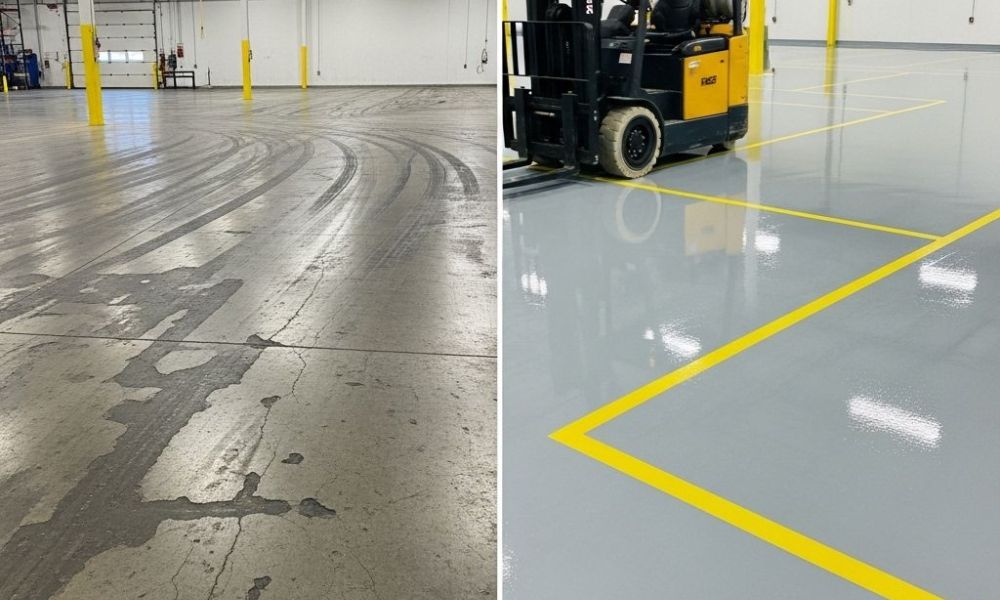
Commercial epoxy flooring is built for heavy use, chemical exposure, and safety compliance. These systems are thicker, tougher, and formulated to survive conditions that would destroy a residential coating within months.
We install Commercial Epoxy Flooring and industrial epoxy coatings in:
- Warehouses and manufacturing plants
- Retail stores and hotels
- Restaurants and commercial kitchens
- Healthcare facilities and auto repair shops
Commercial systems differ in several concrete ways:
- Heavy-duty formulations that carry forklift traffic and dropped tools
- Impact and abrasion resistance for loading zones and production floors
- Chemical resistance against solvents, acids, and cleaning agents
- OSHA safety considerations, including slip-resistant textures and marked zones
- Long-term durability under nonstop daily use
- Minimal downtime, since we schedule fast-cure products to keep local businesses running
Manufacturer technical data from suppliers like Sherwin-Williams, Sika, and ArmorPoxy defines the traffic ratings and chemical tolerances for these products. We match the right system to your facility’s load and exposure.
Residential vs Commercial Epoxy Flooring: Comparison Table
| Factor | Residential Epoxy | Commercial Epoxy |
| Intended use | Homes, garages, lanais | Businesses, warehouses, kitchens |
| Durability | Moderate to high | Very high |
| Thickness | Thinner (single or dual coat) | Thicker (multi-layer builds) |
| Appearance | Decorative focus | Function focus |
| Decorative options | Wide range | Limited, safety-driven |
| Installation process | 1–3 days typical | Multi-day, phased |
| Maintenance | Simple cleaning | Scheduled cleaning protocols |
| Lifespan | 10–20 years | 5–15+ years under heavy load |
| Cost | Lower | Higher |
| Traffic capacity | Foot and light vehicle | Forklift and heavy equipment |
| Chemical resistance | Household level | Industrial level |
| UV resistance | Optional topcoats | Application-dependent |
| Repair requirements | Occasional | Planned per usage |
When each is the better investment: Residential epoxy is the smarter choice when appearance, home value, and light-duty durability drive the decision. Commercial epoxy is the better investment when safety compliance, chemical exposure, and heavy traffic define your daily reality. We help you match the system to the demand, not the other way around.
Which Epoxy Flooring Is Right for Your Property?
The right system depends on who uses the space and how hard they use it.
Homeowners
For homes, we recommend residential-grade systems tuned for appearance and easy upkeep. Best applications include:
- Garages and workshops
- Lanais and patios
- Kitchens and laundry rooms
Our Patio & Lanai Coatings resist Maui’s salt air and moisture while adding a decorative finish.
Business Owners
For businesses, we install coatings that balance looks with durability. Ideal spaces include:
- Retail floors and offices
- Restaurants and commercial kitchens
- Hotels and lobbies
Industrial Facilities
For industrial sites, we specify systems engineered for maximum load and chemical exposure:
- Self-leveling epoxy for smooth, level production floors
- Quartz systems for abrasion and impact zones
- Anti-slip coatings for wet or high-traffic areas
- Heavy-duty commercial coatings for forklift and equipment traffic
Decorative Options Available
Epoxy offers a wide range of finishes. We match each to its environment.
- Solid color epoxy — clean, uniform look for garages and utility spaces
- Decorative flakes — hides minor imperfections and adds slip texture
- Metallic Epoxy Floors — flowing, three-dimensional effects for showrooms and living areas
- Quartz Epoxy Flooring — colored quartz aggregate for kitchens, healthcare, and wet zones
- Satin finish — low sheen that hides dust and scuffs
- Gloss finish — high shine that reflects light and shows off color
- Matte finish — subtle, non-reflective surface for modern interiors
Metallic works well indoors where UV stays low. Quartz suits commercial kitchens and clinics that need traction and easy sanitation.
Factors That Affect Epoxy Flooring Performance
Even the best product fails if the conditions aren’t right. We address every one of these before we coat:
- Concrete condition — cracks and spalling get repaired first
- Surface preparation — diamond grinding to the correct profile
- Moisture testing — we test slabs before installation to prevent delamination
- Climate — Hawaii’s humidity affects cure times and product choice
- UV exposure — outdoor areas get UV-stable topcoats
- Heavy equipment — load ratings drive system thickness
- Installation quality — trained crews, correct mix ratios, timed coats
- Product quality — industrial-grade resins over consumer kits
- Maintenance schedule — regular cleaning extends lifespan
Cost Considerations
Epoxy pricing depends on the space and its demands, not a flat rate. We give exact numbers after we assess your slab. The factors that move cost include:
- Surface repairs to cracks, pits, or spalling
- Coating thickness and number of layers
- Decorative finishes like metallic or quartz
- Total square footage
- Commercial complexity, including safety zones and chemical resistance
- Preparation requirements based on slab condition
The long-term ROI is where epoxy earns its value. A properly installed floor reduces maintenance costs, resists damage, and delays replacement. For epoxy floor installation on Maui, that durability offsets the upfront investment over time.
Why Professional Installation Matters
Epoxy looks simple in online videos, but the results tell a different story once humidity, moisture, and traffic take over. We don’t leave anything to chance. Our process covers:
- Diamond grinding to create the correct concrete profile
- Moisture testing to confirm the slab is ready
- Crack repair and joint filling before coating
- Proper primers matched to the slab and system
- Industrial-grade products from trusted manufacturers
- Multi-layer systems built for the specific application
- Warranty protection that stands behind the work
- Experienced installers who follow the same process every time
Concrete floor coatings in Hawaii fail most often from skipped moisture testing and poor prep. We follow ACI and ICRI surface standards, and for commercial jobs we build in OSHA-compliant slip resistance.
Why Maui Property Owners Choose Maui Epoxy Solutions
As an epoxy flooring contractor on Maui, we understand what our climate does to floors. Salt air, humidity, and UV exposure demand systems chosen for local conditions, and that’s what we install. Here’s what you get with us:
- Local experience across Maui neighborhoods and commercial properties
- Hawaii climate expertise built into every product recommendation
- Premium materials from established resin manufacturers
- Both residential and commercial project capability
- Customized flooring systems matched to your slab and use
- Professional surface preparation on every job
- High-quality workmanship we stand behind
- A focus on customer satisfaction and long-lasting coatings
Conclusion
Residential and commercial epoxy share the same resin foundation, but they solve different problems. Residential systems prioritize appearance, easy cleaning, and home value. Commercial systems prioritize heavy-duty durability, chemical resistance, and safety compliance. The right choice comes down to five things:
- Traffic and load
- Appearance goals
- Environment and exposure
- Maintenance expectations
- Budget
Whether you’re coating a home garage or an industrial warehouse, we help you choose a system built for Maui’s climate and your daily use. Contact Maui Epoxy Solutions today for a professional consultation and a customized epoxy flooring recommendation.
Frequently Asked Questions
What is the difference between residential and commercial epoxy flooring?
Residential epoxy focuses on appearance, easy cleaning, and home value with thinner, decorative systems. Commercial epoxy uses thicker, heavy-duty formulations built for forklift traffic, chemical exposure, and OSHA safety compliance. Both use epoxy resin, but they’re engineered for very different loads and environments.
Is commercial epoxy stronger than residential epoxy?
Yes. Commercial epoxy is thicker and formulated for heavier loads, impact, and chemical exposure. It carries forklift traffic and survives industrial conditions that would damage residential systems. Residential epoxy is durable for home use but not rated for the demands of warehouses, manufacturing plants, or commercial kitchens.
Can homeowners install commercial-grade epoxy?
Homeowners can request commercial-grade systems, but installation requires professional equipment and training. Proper diamond grinding, moisture testing, and multi-layer application determine success. We install commercial-grade coatings for residential clients who need extra durability, matching the system to the slab and intended use.
How long does epoxy flooring last?
Residential epoxy typically lasts 10 to 20 years with proper care. Commercial epoxy lasts 5 to 15 years or more, depending on traffic and chemical exposure. Lifespan depends heavily on surface preparation, product quality, and maintenance. Professional installation extends the life of any epoxy system.
Which epoxy flooring is best for garages?
Residential garage epoxy flooring with decorative flakes offers the best mix of durability, slip resistance, and appearance. Flakes hide imperfections and add traction, while the seamless surface resists oil and chemical stains. On Maui, we add UV-stable topcoats to resist yellowing from strong sun.
Is epoxy flooring slippery?
Epoxy can be slippery when wet, but we add anti-slip additives or textured finishes to improve traction. For pool decks, kitchens, and commercial spaces, slip resistance is standard in our installations. We follow OSHA guidance for commercial floors to keep walking surfaces safe.
Does epoxy flooring work well in Hawaii’s climate?
Yes, when installed correctly. Hawaii’s humidity, salt air, and UV exposure demand moisture testing, proper priming, and UV-stable topcoats. We choose products rated for these conditions and test every slab before coating. This prevents delamination and yellowing common with improperly installed floors.
How much maintenance does epoxy flooring require?
Very little. Residential floors need routine sweeping and occasional mopping with mild cleaner. Commercial floors follow scheduled cleaning protocols based on traffic and exposure. The seamless surface has no grout lines to trap dirt, making epoxy far easier to maintain than tile or bare concrete.