
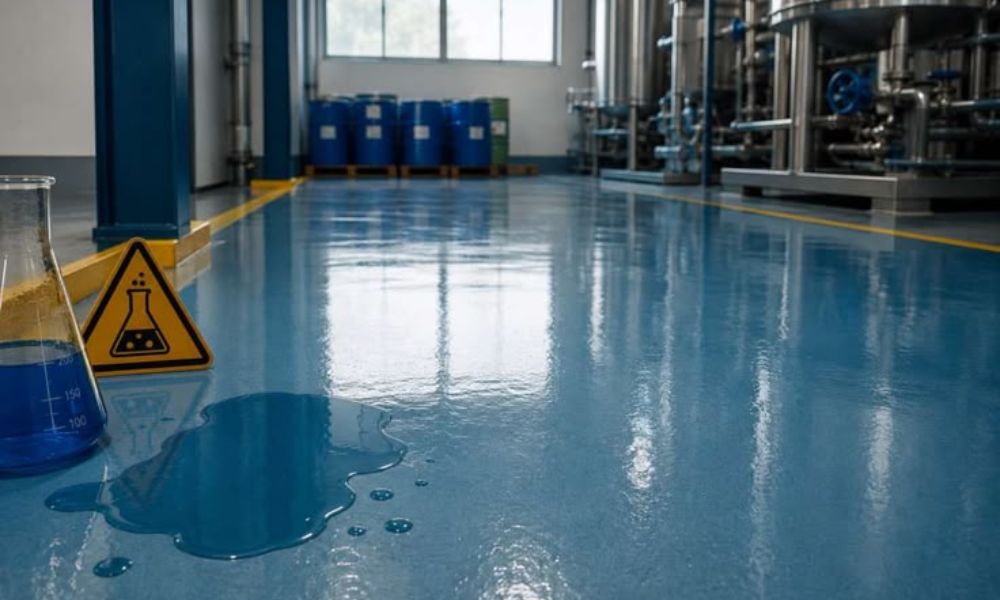
A chemical resistant epoxy floor coating is a protective, resin-based system applied over concrete to help shield it from spills, corrosive substances, abrasion, and heavy daily use. Across Maui and throughout Hawaii, untreated concrete faces a tough combination of humidity, salt air, and demanding traffic. Left unsealed, concrete absorbs liquids, stains easily, and slowly breaks down when exposed to oils, acids, or cleaning agents. The right coating creates a barrier that resists selected chemicals—but the correct system always depends on the specific chemicals, their concentration, exposure time, temperature, and the environment.
Quick Answer: A chemical resistant epoxy floor coating is a protective resin-based flooring system designed to help shield concrete from specified chemical exposure, spills, abrasion, and heavy use. Its performance depends on the epoxy formulation, chemical involved, concentration, temperature, exposure duration, surface preparation, and installation quality.
What Is a Chemical Resistant Epoxy Floor Coating?
Epoxy flooring is created when two components—a resin and a hardener—are mixed and applied over prepared concrete. As they cure, they form a hard, bonded surface that becomes part of the floor rather than sitting loosely on top of it.
A chemical resistant version is formulated to withstand contact with specific substances. This is different from being simply waterproof or stain-resistant. A floor can repel water yet still degrade when exposed to a strong solvent or acid. Chemical resistance means the coating holds up against the particular substances it was designed for.
Common examples include automotive fluids, cleaning agents, oils, solvents, mild acids, and alkaline materials. That said, formulations vary widely. A coating built to handle motor oil in a garage may not perform the same way against concentrated industrial chemicals.
Expert caveat: No epoxy coating should be described as universally resistant to every chemical. Always verify the manufacturer’s chemical-resistance data for the specific substance and concentration involved.
How Does Chemical Resistant Epoxy Protect Concrete?
Concrete is porous. Without protection, liquids seep in, cause stains, and gradually weaken the surface. A properly applied epoxy system changes that in several ways:
- Seamless surface protection — A continuous film covers the concrete with no gaps for liquids to enter.
- Reduced liquid penetration — Spills sit on top instead of soaking in.
- Resistance to selected chemical exposure — The coating tolerates substances it was formulated to handle.
- Protection against abrasion and traffic — Foot traffic, carts, and vehicles cause less wear.
- Easier cleanup — Spills wipe up rather than absorbing into the slab.
- Reduced deterioration — The underlying concrete stays protected from ongoing chemical attack.
None of this works without proper surface preparation. At Maui Epoxy Solutions, the installation process includes grinding, cleaning, and repairing concrete before any coating goes down. That prep work is what allows the epoxy to bond correctly and perform over time.
Key Benefits of Chemical Resistant Epoxy Flooring
1. Protection Against Chemical Spills
When properly specified for the substances involved, epoxy helps guard concrete from oils, cleaning products, and other selected chemicals that would otherwise stain or corrode the slab.
2. Durable Under Heavy Traffic
These floors handle foot traffic, rolling equipment, vehicles, and industrial activity better than bare concrete, making them a practical choice for busy spaces.
3. Easier Cleaning and Maintenance
A seamless coated surface has no grout lines or open pores where dirt collects, so routine cleaning takes less time and effort.
4. Moisture and Spill Protection
Sealed concrete resists moisture better—an advantage in Maui’s humid climate, where damp conditions are a constant factor.
5. Improved Workplace Safety
Textured or anti-slip additives can be built into the system where traction matters, helping reduce slip risks in wet or busy areas.
6. Long-Term Floor Performance
With professional installation and proper maintenance, a well-matched coating can deliver reliable service for years.
Where Is Chemical Resistant Epoxy Flooring Used?
This flooring suits a wide range of environments:
- Garages and automotive spaces
- Workshops and maintenance areas
- Warehouses and industrial facilities
- Commercial spaces and utility rooms
- Kitchens and food-service areas, when the selected system is appropriate
- Any area exposed to oils, cleaning products, or chemicals
For business owners, commercial epoxy flooring offers a seamless solution designed for heavy foot traffic, spills, moisture, and demanding daily operations. Warehouse and industrial settings—where forklifts, chemical storage, and constant activity are common—also benefit from these durable, protective systems.
Why Maui Properties Can Benefit From Chemical Resistant Epoxy
Maui’s environment is beautiful but hard on floors. Humidity, tropical weather, salt air, frequent rain, and heat all take a toll on concrete. Add outdoor-to-indoor foot traffic that tracks in moisture and grit, and you have conditions that reward durable, easy-to-maintain flooring.
Sealed epoxy surfaces resist moisture and clean up quickly, which matters in humid island conditions. Properties in Kihei, Wailea, Kahului, Wailuku, Lahaina, Kula, and Makawao all face these same challenges to varying degrees.
One important distinction: chemical resistance is not the same as UV resistance. A coating built to resist chemicals may still fade under direct sunlight unless it’s formulated for UV exposure. For areas with strong sun, the right system—epoxy, polyaspartic, or a combination—should be selected based on that exposure.
Chemical Resistant Epoxy vs. Standard Concrete Flooring
| Feature | Untreated Concrete | Chemical Resistant Epoxy |
| Chemical protection | Limited | Higher when properly specified |
| Spill cleanup | More difficult | Generally easier |
| Seamless finish | No coating | Yes |
| Abrasion protection | Limited | Improved |
| Customization | Limited | Multiple finishes available |
| Maintenance | Can be demanding | Generally straightforward |
Keep in mind that actual performance depends on the coating formulation, installation quality, substrate condition, and the type of chemical exposure involved.
How Professional Chemical Resistant Epoxy Installation Works
1. Site Evaluation
The floor’s use, chemical exposure, traffic levels, moisture, and environmental conditions are assessed first.
2. Concrete Inspection
The slab is checked for cracks, contamination, moisture issues, and weak areas.
3. Surface Preparation
Grinding, cleaning, crack repair, and contaminant removal create a sound surface for bonding.
4. Primer or Base Layer
A primer promotes strong adhesion between the concrete and the coating that follows.
5. Epoxy Application
The selected system is applied according to manufacturer specifications for the intended exposure.
6. Protective Topcoat
Depending on the system, a topcoat can add traction, UV resistance, or extra durability.
7. Curing and Final Inspection
Curing time must be respected before the floor returns to service, followed by a final walkthrough.
This mirrors the approach used by Maui Epoxy Solutions: consultation, surface preparation, coating application, and a final review. If you want a deeper look at the methods involved, see their professional epoxy coatings and installation resources.
How to Choose the Right Chemical Resistant Epoxy Floor Coating
Use this checklist before committing to a system:
- Type of chemicals encountered
- Chemical concentration
- Frequency of exposure
- How long spills sit before cleanup
- Operating temperature
- Traffic levels
- Vehicle or machinery loads
- Indoor vs. outdoor use
- Moisture conditions
- Slip-resistance requirements
- Desired appearance
- Acceptable downtime
- Manufacturer technical data
A professional assessment is genuinely valuable here. The strongest-looking or most expensive coating isn’t always the correct choice for a specific chemical environment. Matching the product to the real conditions is what delivers lasting results. Explore resistant epoxy coatings built to handle acids, alkalis, solvents, and corrosive substances.
Epoxy vs. Polyaspartic for Chemical-Exposed Areas
Both systems have their place:
- Epoxy is known for strong adhesion and durable interior flooring applications.
- Polyaspartic coatings can offer faster curing and strong UV performance, depending on formulation, which makes them useful for outdoor and commercial work.
Neither is automatically better for every chemical exposure. The right choice comes down to the actual project requirements—chemicals involved, sunlight, downtime tolerance, and traffic. In many cases, a combination system provides the best balance of protection and appearance.
Maintenance Tips for Chemical Resistant Epoxy Floors
- Clean spills promptly to limit contact time.
- Sweep regularly to remove grit that causes wear.
- Mop with mild soap and water for routine cleaning.
- Use cleaning products compatible with the coating.
- Avoid unknown or aggressive chemicals.
- Skip unnecessary abrasive cleaning methods.
- Inspect high-traffic areas periodically.
- Follow the manufacturer’s maintenance recommendations.
Simple, consistent care keeps these floors performing and looking good for the long haul.
Frequently Asked Questions
What is a chemical resistant epoxy floor coating?
It’s a resin-based protective flooring system applied over concrete to help resist spills, abrasion, and specified chemicals. Performance depends on the formulation, the chemical involved, its concentration, temperature, exposure time, and installation quality. It creates a seamless, protective barrier over the slab.
Is epoxy flooring resistant to chemicals?
Many epoxy systems resist chemicals, but resistance depends on the specific formulation and the chemical involved. A coating built for motor oil may not withstand strong acids. Always verify the manufacturer’s chemical-resistance data for the exact substance and concentration you expect.
What chemicals can epoxy floors resist?
Depending on the product, epoxy floors can resist oils, automotive fluids, many cleaning agents, mild acids, alkalis, and some solvents. Resistance varies by formulation and exposure conditions, so no single coating handles every chemical equally. Match the system to your actual exposure.
Is chemical resistant epoxy suitable for commercial floors?
Yes. Chemical resistant epoxy works well in high-traffic commercial environments like warehouses, workshops, kitchens, and industrial facilities. It handles spills, moisture, and constant activity while offering a seamless, easy-to-clean surface, provided the system is specified for the specific chemicals present.
How long does a chemical resistant epoxy floor last?
Lifespan varies based on installation quality, traffic levels, maintenance, chemical exposure, and product selection. A well-installed, properly maintained system in a suitable environment can last many years. Aggressive chemical exposure or poor prep will shorten that service life considerably.
Can epoxy protect concrete from chemical spills?
Yes, when properly specified for the substances involved. Epoxy creates a barrier that keeps spills from soaking into concrete. However, prolonged or highly aggressive exposure requires a coating specifically rated for that chemical, concentration, and contact time.
Is epoxy flooring suitable for Maui’s climate?
Epoxy suits Maui well because it resists moisture and cleans easily in humid, salt-air conditions. Keep in mind that chemical resistance differs from UV resistance—sun-exposed areas may need a UV-stable topcoat or polyaspartic system to prevent fading.
How do I choose the right chemical resistant epoxy?
Consider the chemicals present, their concentration, exposure frequency, traffic levels, temperature, and moisture conditions. Then match those factors to the manufacturer’s technical specifications. A professional assessment helps ensure the coating fits your real-world environment rather than just its appearance.
Get the Right Coating for Your Maui Property
If your property in Maui regularly encounters oils, cleaning chemicals, solvents, industrial substances, or heavy traffic, choosing the correct coating starts with understanding your floor’s actual exposure. The best system is the one matched to your specific conditions—not just the toughest-sounding option.
Maui Epoxy Solutions can evaluate your space and recommend a coating suited to your environment. To get started, request a free quote and talk through your project with a local specialist who understands island conditions.