
What Is Quartz Flooring? Everything You Need to Know
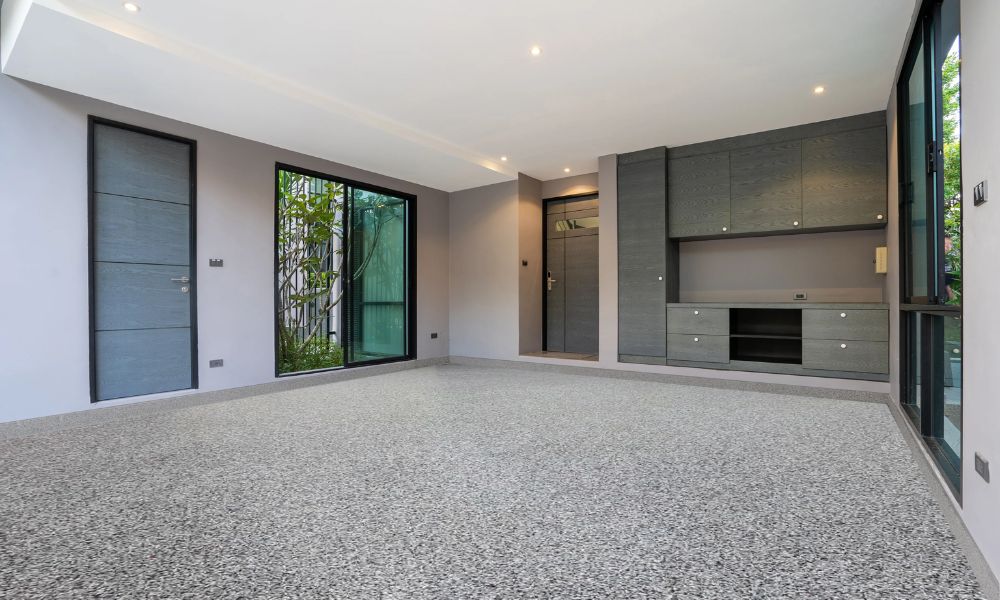
Quartz flooring is a high-performance resin flooring system made by combining colored quartz aggregates with epoxy or polyurethane resin. This creates a seamless, durable, and slip-resistant surface that bonds directly to concrete substrates.
Because quartz flooring has no grout lines or joints, it is easier to clean and maintain than traditional flooring materials such as ceramic tile, vinyl, or bare concrete. The embedded quartz aggregate enhances strength, impact resistance, and traction, making it a popular choice for commercial kitchens, healthcare facilities, schools, industrial plants, retail stores, garages, and residential spaces.
A typical quartz flooring installation includes concrete surface preparation, primer application, broadcasting decorative quartz into a resin base coat, and sealing the surface with a protective topcoat. When installed correctly, quartz floor coatings can withstand heavy foot traffic, chemical exposure, moisture, and daily wear for many years.
Flooring does more than cover a concrete slab—it protects your investment, improves safety, and enhances the appearance of your space. That’s why quartz flooring has become one of the most trusted flooring solutions for facility managers, contractors, architects, and homeowners seeking long-term durability and performance.
7 Key Benefits of Quartz Flooring
1. Exceptional Durability
Quartz flooring is built to handle hard use. The quartz aggregate creates a surface that resists impact, abrasion, and the constant stress of heavy foot traffic or equipment loads.
Retail stores, warehouses, and parking garages see thousands of contact points per day. Quartz flooring systems hold up under those conditions without cracking, chipping, or showing premature wear. In residential settings like garages and workshops, the same resilience protects against dropped tools and vehicle traffic.
2. Superior Slip Resistance
One of the most practical benefits of quartz flooring is its textured surface. The exposed aggregate creates natural traction that significantly reduces slip hazards, even in wet conditions.
This matters in environments like:
- Pool decks and locker rooms where water is constant
- Commercial kitchens where grease and moisture accumulate
- Building entrances exposed to rain and tracked-in moisture
- Bathrooms and laundry rooms in residential properties
Slip-resistant flooring reduces liability for business owners and improves daily safety for employees, customers, children, and seniors.
3. Attractive and Customizable Appearance
Decorative quartz flooring comes in a wide range of colors, blends, and finishes. Whether you want a uniform neutral tone for a professional office or a vibrant, multi-colored blend for a retail space, there’s a combination that fits.
Beyond color, the surface texture itself contributes to the aesthetic — creating a natural, stone-like appearance without the cost or maintenance demands of natural stone. Quartz flooring complements both modern and traditional design styles, which is part of why architects and designers increasingly specify it for high-visibility spaces.
4. Low Maintenance Requirements
Low maintenance flooring is a practical priority for busy homeowners and facility managers. Quartz flooring delivers on that front. The seamless surface has no grout lines or porous areas to trap dirt, bacteria, or cleaning product residue.
Routine maintenance typically involves sweeping and mopping with a neutral cleaner. Unlike tile, there’s no grout to scrub. Unlike carpet, there’s no deep cleaning required to remove embedded debris. Over time, this translates to real savings in both labor hours and cleaning costs.
5. Chemical and Moisture Resistance
Quartz floor coatings resist a broad range of chemicals, including oils, solvents, cleaning agents, and industrial fluids. The sealed, non-porous surface prevents liquids from penetrating into the substrate.
This makes epoxy quartz flooring especially practical in:
- Warehouses and manufacturing facilities handling lubricants or chemicals
- Garages exposed to motor oil and road salt
- Utility rooms and laundry areas where water and detergents are regular
- Food service environments where sanitizers are used daily
Moisture resistance also matters in basements and below-grade spaces prone to humidity, where traditional flooring options often fail prematurely.
6. Long-Term Cost Effectiveness
The upfront cost of a quartz flooring system is higher than basic vinyl or paint-on epoxy. But the lifecycle comparison tells a different story. A properly installed quartz system can last 20 years or more with minimal repair, while cheaper alternatives often need replacement or significant maintenance within 5–10 years.
Fewer replacements, lower maintenance labor, and reduced slip-and-fall liability create a strong return on investment — especially in commercial environments where downtime for flooring repairs carries real operational costs.
7. Hygienic, Seamless Surface
Grout lines, seams, and surface cracks are breeding grounds for bacteria and mold. Quartz flooring eliminates those gaps entirely. The seamless surface is easy to sanitize, which is why it’s a go-to choice in healthcare facilities, commercial kitchens, schools, and laboratories.
For residential use, this same hygiene advantage applies in kitchens, bathrooms, and pet areas — anywhere cleanliness is a priority.
Commercial Applications of Quartz Flooring
Commercial quartz flooring is well established across a wide range of industries. Businesses choose it because it meets the demands of real-world use without sacrificing appearance or safety compliance.
Common commercial applications include:
- Retail stores — high foot traffic, brand-consistent aesthetics
- Restaurants and commercial kitchens — slip resistance, chemical resistance, easy sanitization
- Warehouses and distribution centers — impact resistance, heavy load capacity
- Manufacturing facilities — industrial flooring systems that handle chemical exposure
- Healthcare facilities and clinics — seamless, hygienic, easy to disinfect
- Educational institutions — durable, low-maintenance, safe for students
- Office buildings — professional appearance with long service life
For any business where floor performance affects safety, operations, or customer experience, quartz flooring is worth serious consideration.
Residential Applications of Quartz Flooring
Residential quartz flooring has grown in popularity as more homeowners look for durable flooring solutions that hold up beyond the typical 10-year replacement cycle.
The most practical residential applications include:
- Garages and driveways — resists vehicle traffic, oil stains, and freeze-thaw cycles
- Basements — handles moisture and provides a finished, usable surface
- Kitchens and utility rooms — easy to clean, chemical and spill resistant
- Entryways and mudrooms — handles dirt and moisture from daily use
- Patios and outdoor spaces — UV-stable options designed for exterior environments
- Workshops — protects against heavy tool drops and abrasive materials
For homeowners who want a floor that genuinely handles daily life, quartz delivers both function and visual appeal.
Why Quartz Flooring Is Ideal for High-Traffic Areas
How long does quartz flooring last? A professionally installed quartz floor typically lasts 15–25 years in commercial settings and even longer in residential applications with routine care.
Can quartz flooring handle heavy traffic? Yes. The quartz aggregate within the resin matrix significantly increases surface hardness compared to standard epoxy coatings, making it suitable for forklifts, commercial kitchen equipment, and constant pedestrian use.
Is quartz flooring worth the investment? For most property owners, yes. The combination of low maintenance, long lifespan, reduced liability, and consistent appearance makes the cost-per-year calculation favorable compared to lower-cost alternatives that require frequent replacement.
Choosing the Right Quartz Flooring System
Not every quartz system is right for every project. Here’s what to consider before specifying or purchasing:
- Traffic level — Light residential use versus heavy industrial environments require different system thicknesses and topcoat formulations.
- Slip resistance requirements — Broadcast aggregate density affects texture and traction; high-risk wet areas need coarser profiles.
- Design preferences — Color blends, aggregate size, and topcoat sheen level all affect the final look.
- Indoor vs. outdoor use — Exterior applications require UV-stable resins to prevent yellowing and surface degradation.
- Professional installation — Surface preparation is the most critical factor in system longevity. Shortcuts during prep lead to delamination, bubbling, or premature failure regardless of product quality.
Working with an experienced flooring contractor ensures the system selected matches your actual conditions — not just the best-case scenario on a product data sheet.
Conclusion
Quartz flooring earns its reputation across both commercial and residential environments because it delivers on the things that actually matter: durability, safety, low maintenance, and long-term value. It outperforms standard epoxy, tile, and vinyl across nearly every practical measure, particularly in high-traffic or chemically demanding spaces.
If you’re evaluating flooring options for a commercial facility, industrial setting, or residential renovation, the next step is to consult a qualified flooring professional. They can assess your substrate condition, traffic demands, and environment to recommend the right quartz system — one that will perform reliably for years without ongoing headaches.