
Every floor collects what lands on it. Grout lines, cracked tile, and porous concrete trap moisture, food residue, and microbes that daily mopping can’t fully reach. Hawaii’s warm, humid climate makes the problem worse, because mold and bacteria grow faster in heat and moisture.
Anti-bacterial epoxy floors address this at the surface level. This guide explains what they are, how they work, where they deliver the most value, and how a professional installation comes together.
Ready to upgrade your concrete into a durable, stylish surface? Our team delivers high-quality epoxy flooring built to last in Maui’s climate. or call 01202 985 241Transform Your Floors with Experts You Can Trust
What Are Anti-Bacterial Epoxy Floors?
Anti-bacterial epoxy floors are resin floor coatings that contain antimicrobial additives mixed directly into the epoxy. These additives, such as silver-ion compounds (metal ions that disrupt bacterial cell function), slow the growth of bacteria, mold, and mildew on the floor surface.
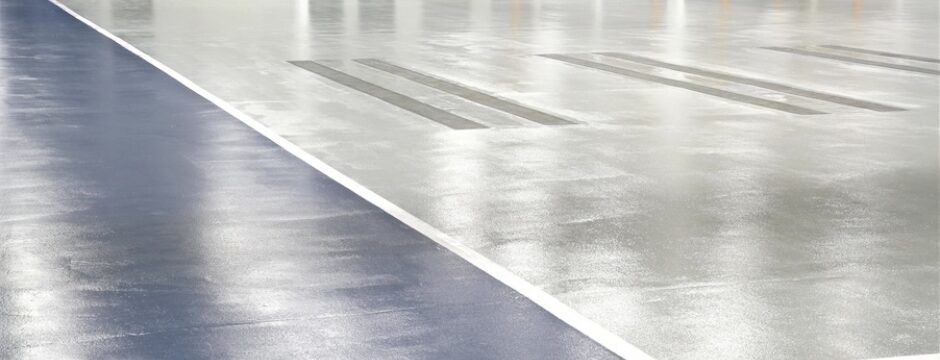
The result is a seamless, non-porous floor with no grout lines or seams where contaminants can settle. Antimicrobial epoxy flooring combines two layers of protection:
- Physical protection: A smooth, sealed surface that liquids and soil can’t soak into.
- Chemical protection: Built-in additives that limit microbial growth between cleanings.
One distinction matters here. Antimicrobial additives protect the floor itself from odor, staining, and degradation caused by microbes. They do not replace cleaning or disinfection. The U.S. Environmental Protection Agency (EPA) regulates antimicrobial claims, and treated surfaces work best as part of a full sanitation program, not as a substitute for one.
When you get quotes, ask any installer which antimicrobial additive their system uses and whether it has been tested to ISO 22196, the international standard for measuring antibacterial activity on non-porous surfaces.
How Do Antimicrobial Additives Work in Epoxy?
Antimicrobial additives work by interfering with how microorganisms grow and reproduce. Silver ions, one of the most common additives, bind to bacterial cell walls and disrupt the processes cells need to survive and multiply.
Because the additive is blended into the resin before application, the protection runs through the coating, not just across the top. Light surface wear doesn’t strip it away. That makes it a better fit for busy facilities than spray-on treatments, which wear off with foot traffic and cleaning.
If you want to verify a product’s claims, request its technical data sheet and look for ISO 22196 or ASTM test results.
What Are the Benefits of Hygienic Epoxy Floors?
Hygienic epoxy floors reduce the places where contamination can hide. That single advantage supports several others.
1. Seamless, Non-Porous Surface
Epoxy cures into one continuous surface with no grout, joints, or seams. Tile grout can absorb liquids and hold bacteria even after scrubbing. A seamless floor removes that weak point completely.
2. Easier, Faster Cleaning
Smooth epoxy wipes clean with standard mops, auto-scrubbers, and approved cleaning agents. Spills stay on the surface instead of soaking in. Your staff spends less time scrubbing and more time on other tasks.
3. Chemical Resistance
Commercial kitchens, labs, and clinics use strong cleaners and disinfectants every day. Quality epoxy systems resist common chemicals, oils, and acids without etching or breaking down. Your floor holds up to frequent sanitizing.
4. Moisture and Mold Resistance
Maui’s humidity creates steady pressure on flooring. Mold and mildew thrive in damp, warm conditions, especially in kitchens, bathrooms, and ground-level spaces. A sealed epoxy surface blocks moisture penetration, and the antimicrobial additives limit growth on top.
5. Long-Term Durability
Properly installed commercial epoxy handles heavy foot traffic, rolling carts, and dropped equipment. A well-maintained system lasts many years before it needs a recoat, which lowers the long-term cost compared with frequent tile or vinyl replacement.
6. Design Flexibility
Hygiene doesn’t require a plain gray floor. Anti-bacterial epoxy floors come in solid colors, flake blends, and quartz finishes. You can match brand colors, add safety striping, or include slip-resistant texture for wet areas.
Before you choose a finish, list your facility’s top three demands, such as chemical exposure, wet conditions, or appearance, and share them with your installer.
Where Are Anti-Bacterial Epoxy Floors Used?
Anti-bacterial epoxy floors serve any space where cleanliness affects safety, compliance, or reputation. Four industries benefit the most.
Healthcare Facilities
Hospitals, clinics, and dental offices face the highest hygiene stakes. The Centers for Disease Control and Prevention (CDC) estimates that on any given day, about 1 in 31 hospital patients has at least one healthcare-associated infection. Surfaces play a role in how pathogens spread, so floors that clean easily and resist microbial growth support broader infection-control efforts. Exam rooms, operating suites, hallways, and patient restrooms all benefit.
Food Service and Commercial Kitchens
The FDA Food Code requires floors in food establishments to be smooth, durable, nonabsorbent, and easily cleanable. Antimicrobial epoxy flooring meets those requirements and handles grease, hot water, and daily washdowns. Restaurants, bakeries, breweries, and food processing areas across Maui use epoxy to pass health inspections and keep kitchens sanitary. Integral cove bases, where the epoxy curves up the wall, remove the corner seam where grime collects.
Laboratories
Labs need floors that resist chemical spills and support controlled conditions. Epoxy’s chemical resistance protects the surface from solvents and reagents. The seamless finish supports contamination control in research, testing, and medical labs.
Schools and Childcare Centers
Children spread germs quickly, and schools see heavy daily traffic. Hygienic epoxy floors in cafeterias, restrooms, locker rooms, and classrooms make daily cleaning faster and more effective. The durable surface also stands up to years of student use.
Other strong fits include gyms, veterinary clinics, salons, spas, and residential spaces like kitchens, bathrooms, and garages.
If your facility falls into one of these categories, check your industry’s specific flooring requirements before you schedule an assessment.
How Are Anti-Bacterial Epoxy Floors Installed?
Installation quality determines how well an anti-bacterial epoxy floor performs. Most failures, such as peeling, bubbling, or delamination, trace back to poor surface preparation. A professional installation follows these steps:
- Inspect the concrete. The installer checks for cracks, damage, existing coatings, and contamination such as oil or grease.
- Test for moisture. Moisture vapor rising through concrete can cause epoxy to lift. This step is especially critical in Hawaii’s climate. Installers use standardized tests such as ASTM F2170 (relative humidity probes) to measure it.
- Grind the surface. Diamond grinding opens the concrete’s pores and creates a rough profile so the epoxy bonds mechanically.
- Repair cracks and damage. The crew fills cracks, spalls, and low spots to create a level, uniform base.
- Apply the primer. A penetrating primer soaks into the concrete and anchors the system.
- Apply the antimicrobial body coat. The epoxy, with antimicrobial additives already blended in, goes down in an even layer. Flakes, quartz, or color pigments go in at this stage.
- Install cove bases where needed. In kitchens and healthcare spaces, the epoxy curves up the wall to remove corner seams.
- Apply the topcoat. A clear, durable topcoat seals the system and adds UV, scratch, and slip resistance.
- Allow full cure time. Most systems handle light foot traffic within 24 to 48 hours. Full chemical and heavy-traffic resistance takes up to about seven days, depending on the product and conditions.
Ask your installer to walk you through their moisture-testing and surface-prep process before any work starts.
How Do You Maintain Antimicrobial Epoxy Flooring?
Antimicrobial epoxy flooring needs simple, consistent care to perform at its best. Follow these steps:
- Sweep or dust-mop daily to remove grit that can scratch the topcoat.
- Mop with a pH-neutral cleaner for routine cleaning.
- Use approved disinfectants in healthcare and food areas, following your facility’s sanitation protocol.
- Clean spills promptly, especially oils and harsh chemicals.
- Avoid abrasive pads and harsh scrubbing tools that dull the finish.
- Schedule periodic inspections so you can recoat high-wear areas before damage spreads.
Why Choose Maui Epoxy Solutions for Epoxy Flooring on Maui?
Local experience matters for epoxy flooring on Maui. Island conditions, including high humidity, salt air, intense UV, and moisture in concrete slabs, require installation methods built for Hawaii, not the mainland.
Maui Epoxy Solutions installs commercial and residential epoxy floors across the island, including Kihei, Kula, Makawao, Pukalani, Wailea, and Wailuku. Our team handles every stage, from moisture testing and diamond grinding to final topcoat, using professional-grade materials suited to local conditions. We match each system to how your space is actually used, whether that’s a busy restaurant kitchen, a medical office, or a home garage.
Frequently Asked Questions About Anti-Bacterial Epoxy Floors
Do anti-bacterial epoxy floors kill bacteria?
Anti-bacterial epoxy floors slow the growth of bacteria, mold, and mildew on the surface. They do not sterilize the floor or replace regular cleaning and disinfection.
How long do anti-bacterial epoxy floors last?
A professionally installed commercial epoxy floor typically lasts 10 to 20 years with proper care, depending on traffic and use. High-wear areas may need a topcoat refresh sooner.
Is antimicrobial epoxy flooring safe for food service?
Yes. Antimicrobial epoxy flooring meets FDA Food Code standards for smooth, nonabsorbent, easily cleanable floors, which makes it a common choice for commercial kitchens.
Are hygienic epoxy floors slippery?
Smooth epoxy can be slippery when wet. Installers add anti-slip aggregates to the topcoat for kitchens, restrooms, and other wet areas.
Can anti-bacterial epoxy go in a home?
Yes. Homeowners use it in kitchens, bathrooms, laundry rooms, and garages for easier cleaning and better mold resistance.
How much does epoxy flooring cost on Maui?
Cost depends on square footage, concrete condition, system type, and finish. An on-site assessment gives you an accurate quote.
Get a Cleaner, Safer Floor for Your Maui Space
Anti-bacterial epoxy floors give your facility a seamless, durable, easy-to-clean surface that holds up to Hawaii’s climate. Whether you run a clinic, restaurant, lab, or school, or want a healthier home, the right system starts with a proper assessment.