
Homeowners constantly seek flooring solutions that balance beauty, strength, and value. Recently, residential epoxy flooring has surged in popularity. Once reserved for industrial warehouses and commercial garages, this resilient material has made a stunning transition into modern homes. Homeowners now recognize that epoxy offers an unbeatable combination of longevity and customizable style that traditional materials struggle to match.
What is Residential Epoxy Flooring?
Epoxy flooring is a specialized surface system created by mixing two main components: a polymer resin and a hardening agent. When mixed, these elements trigger a chemical reaction that creates a rigid plastic material. This material bonds tightly to the existing floor—usually concrete—resulting in a seamless, highly durable surface. Unlike standard floor paints that sit on top of the concrete and eventually peel, epoxy cures and integrates with the foundation to create an incredibly tough barrier.
Key Benefits of Epoxy Flooring
Unmatched Durability
Epoxy creates one of the hardest flooring surfaces available. It easily withstands heavy foot traffic, dropped items, and rolling weight. With proper care, a residential epoxy floor can last 10 to 20 years before requiring a touch-up. Its resistance to chipping and cracking makes it an excellent long-term investment.
Low Maintenance
Because epoxy creates a seamless surface, dirt, dust, and allergens have nowhere to hide. You do not have to worry about scrubbing grout lines or polishing wood grains. A simple routine of sweeping and occasional mopping with a gentle cleaner keeps the floor looking brand new.
Aesthetic Appeal
Epoxy flooring delivers a sleek, polished look that elevates the appearance of any room. It catches the light beautifully and makes spaces feel larger and brighter.
Cost-Effectiveness
When you factor in its long lifespan and minimal maintenance requirements, epoxy provides incredible value. The initial installation cost is highly competitive, and the lack of replacement or heavy maintenance costs over the years saves you money in the long run.
Excellent Water Resistance
Spills and leaks are inevitable in any home. Epoxy is non-porous and highly water-resistant, meaning liquids pool on the surface instead of seeping into the floor. This protects your home from water damage, mold, and mildew.
Best Areas to Use Epoxy in Homes
Epoxy adapts beautifully to multiple areas throughout a house:
- Garages: This is the most popular residential application. Epoxy easily handles hot tires, oil spills, and heavy tools, transforming a dusty garage into a clean, functional workspace.
- Basements: Basements are notoriously prone to moisture. Epoxy provides a moisture-blocking barrier that prevents dampness while turning a dark storage area into a bright, livable space.
- Kitchens: The seamless, easy-to-clean nature of epoxy makes it perfect for kitchens, where food spills and heavy foot traffic are daily occurrences.
Design & Customization Options
You can customize epoxy to match any interior design style. Popular options include:
- Color Flakes: Acrylic chips are broadcast into the wet epoxy to create a textured, multi-colored look that also provides extra grip.
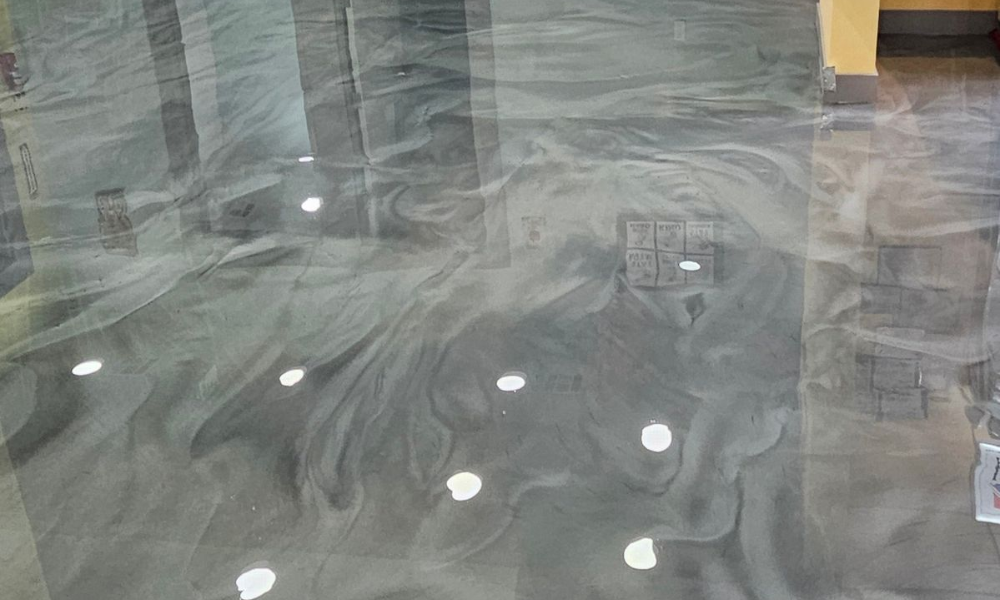
- Metallic Epoxy: This technique uses metallic pigments to create a swirling, three-dimensional effect that mimics marble or liquid metal.
- Solid Colors: Available in almost any hue, solid color epoxy provides a clean, minimalist finish.
Epoxy vs. Tile, Wood, and Vinyl
When choosing flooring, it helps to see how epoxy stacks up against traditional options:
- Tile: Tile requires grout, which stains easily and requires harsh chemicals to clean. Epoxy is entirely seamless. Tile can also crack under heavy impact, whereas epoxy absorbs shocks effectively.
- Wood: Hardwood floors are beautiful but highly susceptible to water damage, scratching, and warping. Epoxy resists water entirely and easily repels scratches from pets or moving furniture.
- Vinyl: While vinyl is affordable and water-resistant, it can peel, dent, and wear out over time. Epoxy provides a much harder, more permanent solution that bonds directly to the subfloor.
The Installation Process
Proper installation is critical for a lasting epoxy floor. The process typically involves:
- Surface Preparation: Installers grind or shot-blast the concrete to remove old coatings and open the concrete pores.
- Repairs: Any cracks or divots in the concrete are filled and smoothed.
- Primer Application: A primer coat goes down to ensure the epoxy bonds securely to the concrete.
- Base Coat and Broadcast: The main epoxy layer is applied, followed by any color flakes or metallic pigments.
- Topcoat: A clear, UV-resistant topcoat is added to protect the floor from fading and scratches.
Cost Overview
The cost of residential epoxy flooring typically ranges from $3 to $12 per square foot, including professional installation. The final price depends on the condition of your existing concrete, the size of the area, and the complexity of the design you choose. Solid colors sit at the lower end of the price spectrum, while custom metallic finishes represent the higher end.
FAQs
Is epoxy flooring slippery?
High-gloss epoxy can be slippery when wet. However, installers easily solve this by adding a slip-resistant aggregate to the final topcoat, making it safe for daily household use.
Can I install epoxy flooring myself?
While DIY kits exist, professional installation is highly recommended. The longevity of the floor depends entirely on proper concrete preparation and precise chemical mixing, which requires professional equipment and expertise.
How do I clean my epoxy floor?
Use a soft-bristle broom or a dust mop for daily cleaning. For deeper cleaning, use a mixture of warm water and a clear, non-abrasive floor cleaner. Avoid acidic products like vinegar, which can dull the glossy finish over time.
Conclusion
Residential epoxy flooring offers a remarkable blend of durability, aesthetic flexibility, and ease of maintenance. Whether you want to revitalize a damp basement, upgrade a heavily used garage, or create a modern kitchen, epoxy delivers a resilient surface built to last for decades. By choosing epoxy, you invest in a smart, cost-effective flooring solution that protects your home while enhancing its overall beauty.