
Choosing the right flooring is a critical decision for any homeowner, business owner, or project manager. The surface underfoot impacts everything from daily operations and maintenance costs to aesthetic appeal and safety. In 2026, two of the most popular and high-performing options remain epoxy flooring and polished concrete. While both offer a sleek, durable finish, they are fundamentally different materials with unique characteristics. Understanding these differences is key to selecting the best flooring option that aligns with your budget, functional needs, and design vision. This detailed comparison will guide you through everything you need to know about epoxy and polished concrete to make a confident and informed choice.
What Is Epoxy Flooring?
Epoxy flooring is not a type of paint, but a thermosetting resin system applied as a coating over a concrete substrate. It is created by mixing two main components: a resin and a hardener. When these are combined, they chemically react to form a rigid, plastic-like material that bonds securely with the concrete beneath it. The result is a seamless, tough, and highly durable surface.
This flooring system is incredibly versatile and can be found in a wide range of settings:
- Residential: Garages, basements, kitchens, and even living areas.
- Commercial: Retail stores, showrooms, offices, and restaurants.
- Industrial: Warehouses, manufacturing plants, laboratories, and automotive shops.
The key benefits of epoxy flooring are compelling. It is renowned for its exceptional durability and resistance to chemicals, stains, and abrasions. A major draw is its aesthetic flexibility; epoxy is available in a vast spectrum of colors, patterns, and finishes, including metallic, flake, and quartz effects, allowing for complete customization.
What Is Polished Concrete?
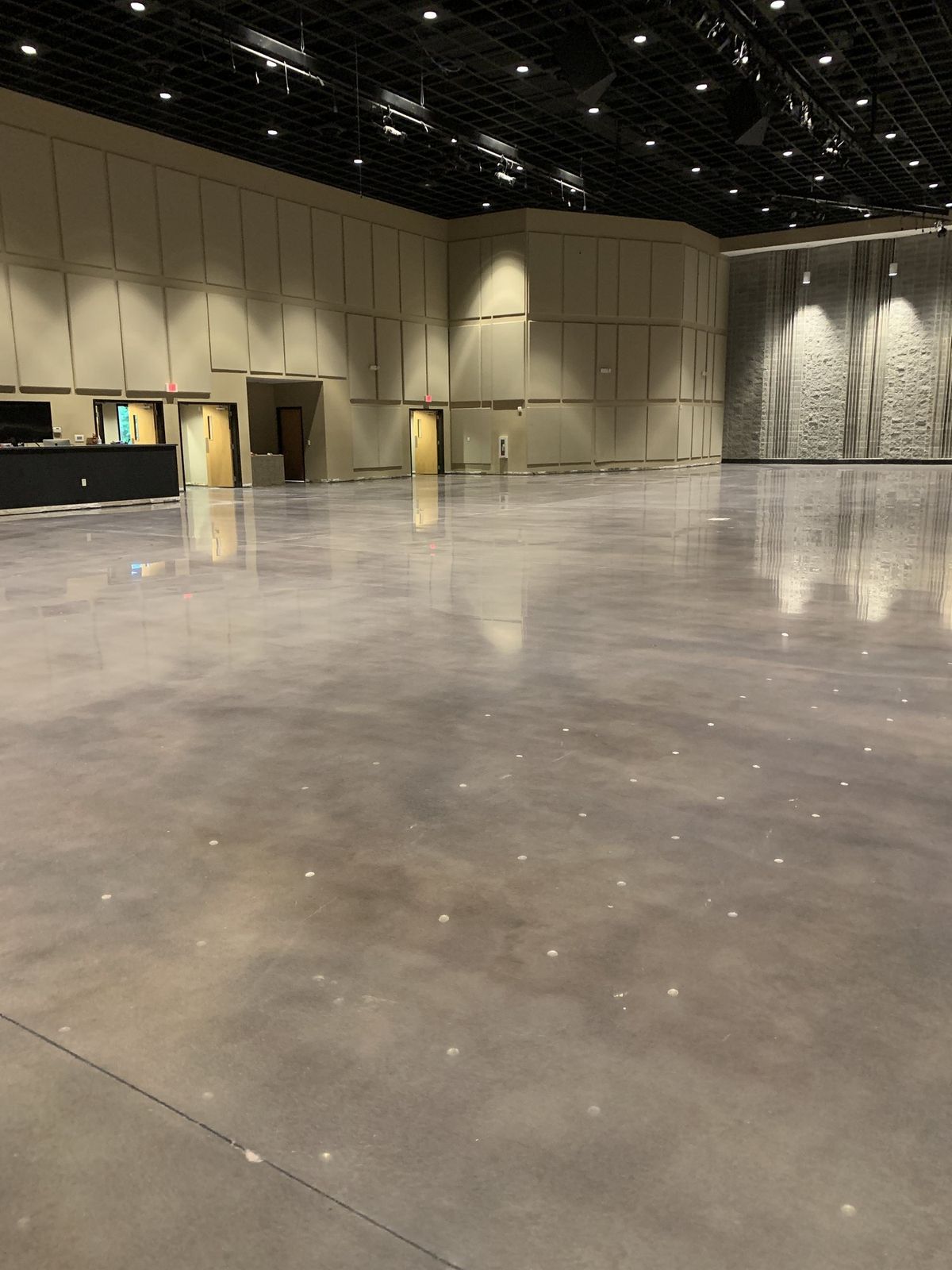
Polished concrete is not a coating or a separate material laid on top of a floor. Instead, it is a multi-step process that transforms the concrete slab itself into a finished flooring surface. The process involves mechanically grinding the concrete with progressively finer diamond-tooled abrasives to achieve the desired level of smoothness and sheen. A chemical densifier is applied during this process, which penetrates the concrete to increase its surface hardness and density. The final result is a beautiful, smooth, and highly resilient floor.
Common applications for polished concrete include:
- Retail and Commercial: Big-box stores, supermarkets, hotels, and modern office buildings.
- Institutional: Schools, museums, and government facilities.
- Residential: Homes with a modern, industrial, or minimalist aesthetic.
The primary advantages of polished concrete are its low maintenance requirements and long-term cost-effectiveness. Since it utilizes the existing concrete slab, it is an inherently sustainable option. Its sleek, minimalist appearance is highly sought after in contemporary design, providing a clean and sophisticated look.
Side-by-Side Comparison
To truly understand which option is better for your project, let’s compare epoxy flooring and polished concrete across several key criteria.
| Feature | Epoxy Flooring | Polished Concrete |
| Durability & Strength | Extremely durable and resistant to chemicals, oil, and impact. | Incredibly strong and abrasion-resistant. Less prone to chipping or peeling. |
| Appearance & Finishes | Limitless customization with colors, patterns, and metallic/flake additives. | More limited, natural look. Sheen levels from satin to high-gloss. |
| Installation | 2-5 days, requires extensive surface prep and curing time. | 3-7 days, a noisy and dusty process involving heavy grinding machinery. |
| Maintenance | Easy to clean, seamless surface. Requires occasional re-coating. | Very low maintenance. Regular sweeping and mopping are sufficient. |
| Safety | Can be slippery when wet, but anti-slip additives can be incorporated. | Can also be slippery, especially with high-gloss finish. |
| Environmental Impact | Contains chemicals and has a higher VOC content during application. | Very low VOCs. Utilizes the existing concrete slab, making it sustainable. |
| Lifespan | 10-20 years for high-quality installations, may need a new topcoat every 5-7 years. | 20+ years, potentially the life of the building with proper care. |
Pros & Cons
Here’s a quick summary of the advantages and disadvantages of each flooring type.
Epoxy Flooring
Pros:
- Exceptional Chemical Resistance: Protects concrete from harsh chemicals, oils, and spills.
- Aesthetic Versatility: Offers a vast array of colors, designs, and custom finishes.
- Seamless and Hygienic: The non-porous surface is easy to clean and prevents mold or bacteria growth.
- High Durability: Creates a hard, wear-resistant surface that can handle heavy traffic.
- Conceals Imperfections: Can be applied over older or slightly damaged concrete to create a new, flawless look.
Cons:
- Can Be Slippery: The smooth, glossy surface can become hazardous when wet without anti-slip additives.
- Sensitive to UV Light: Ambering or yellowing can occur over time with direct sun exposure unless a UV-stable topcoat is used.
- Shorter Lifespan: While durable, it will eventually need to be re-coated or replaced.
- Complex Installation: Requires meticulous surface preparation and is sensitive to moisture during application.
Polished Concrete
Pros:
- Extremely Long Lifespan: Can last for decades, often for the entire life of the building.
- Low Maintenance: Does not require waxing or stripping. Simple cleaning is all that’s needed.
- Cost-Effective Over Time: Lower long-term costs due to minimal maintenance and longevity.
- Sustainable Choice: Utilizes the existing concrete slab, reducing waste and material consumption.
- Allergen-Resistant: Does not harbor dust mites, mold, or other allergens.
Cons:
- Hardness: The surface is very hard and unforgiving, which can be uncomfortable to stand on for long periods and can cause dropped items to break.
- Limited Aesthetics: The final look is dependent on the quality of the existing concrete. Color and pattern options are limited.
- Moisture Sensitivity: If not properly sealed, it can be susceptible to staining from spills.
- Difficult to Repair: Cracks or deep gouges can be challenging and costly to repair seamlessly.
Ideal Use Cases
The best flooring option for 2026 depends entirely on your specific needs and environment.
When to Choose Epoxy Flooring:
- Garages and Workshops: Its resistance to oil, chemicals, and hot-tire pickup makes it the superior choice for automotive environments.
- Industrial and Commercial Kitchens: A seamless, hygienic surface that stands up to heavy spills and constant cleaning is essential.
- When Aesthetics are a Priority: If you need a specific color, branded logo, or unique design, epoxy offers unlimited creative freedom.
- Covering Old or Damaged Concrete: Epoxy can resurface and hide imperfections in an existing slab, giving it a brand-new appearance.
When to Choose Polished Concrete:
- Large Retail Spaces and Warehouses: For large, high-traffic areas, the durability and low maintenance of polished concrete provide excellent long-term value.
- Modern Homes and Offices: Its minimalist, industrial-chic look is perfect for contemporary architectural styles.
- Environmentally Conscious Projects: As a LEED-friendly option, it’s ideal for green building initiatives.
- When Longevity is the Top Priority: If you want a “set it and forget it” floor that will last for decades, polished concrete is the answer.
Cost Factors & Budgeting Tips
Pricing for both flooring systems can vary significantly based on several factors.
Key Cost Factors:
- Project Size: Larger areas typically have a lower price per square foot.
- Condition of the Concrete: Extensive repairs, crack filling, or leveling will increase the cost.
- Complexity and Customization: For epoxy, intricate designs, multiple colors, or metallic flakes add to the price. For polished concrete, a higher gloss level requires more grinding steps and thus costs more.
- Location: Labor rates vary by region.
- Accessibility: Difficult-to-reach areas may incur additional labor charges.
2026 Cost Estimates (per square foot):
- Epoxy Flooring: $4 – $12+. A simple, single-color application is on the lower end, while complex metallic or flake systems are on the higher end.
- Polished Concrete: $3 – $10+. A basic grind and seal is more affordable, while a high-gloss, aggregate-exposed finish will be more expensive.
Budgeting Tips:
- Get Multiple Quotes: Contact at least three reputable contractors to compare pricing and services.
- Evaluate the Substrate: Have a professional assess your concrete slab early. Unexpected repairs are a common cause of budget overruns.
- Consider Long-Term Value: A cheaper upfront cost might lead to higher maintenance or replacement costs down the line. Factor in the total cost of ownership.
Expert Tips for Decision Making
Flooring experts often advise clients to look beyond just the initial price tag. An architect might suggest polished concrete for a minimalist office design to enhance natural light. A contractor specializing in industrial facilities will almost always recommend epoxy for its chemical resistance.
Here are some tips from the pros:
- Define Your Priorities: Is durability, aesthetics, budget, or maintenance your number one concern? Your top priority will heavily influence your choice.
- Test the Concrete: Before committing, especially to polishing, test the hardness of your concrete. Soft concrete may not be suitable for polishing and might require a densifier or an epoxy overlay.
- Request Samples: Always ask to see physical samples of the proposed finish. Colors and sheens can look very different in person than they do online.
Conclusion & Call to Action
Both epoxy flooring and polished concrete are excellent choices for modern, durable flooring in 2026. The right decision comes down to a careful evaluation of your specific needs, environment, and budget. Epoxy offers unparalleled design flexibility and chemical protection, making it ideal for specialized applications. Polished concrete provides unmatched longevity and low maintenance, delivering exceptional long-term value for large-scale and minimalist spaces.
By understanding the distinct pros, cons, and ideal use cases of each, you can select a floor that not only looks great but also performs perfectly for years to come. To get started, we recommend reaching out to experienced flooring professionals in your area. They can assess your concrete, discuss your goals, and provide detailed quotes to help you make the best investment for your property.
Frequently Asked Questions
Is epoxy better than polished concrete?
Neither is inherently “better.” Epoxy is better for environments requiring high chemical resistance and custom aesthetics, like garages or commercial kitchens. Polished concrete is better for large, high-traffic areas where low maintenance and longevity are the primary goals, such as retail stores or modern homes.
Which lasts longer?
Polished concrete generally has a longer lifespan. With proper care, it can last for over 20 years, often for the life of the building. High-quality epoxy flooring lasts 10-20 years but may require a new topcoat every 5-7 years in high-traffic areas to maintain its appearance.
Which is easier to maintain?
Polished concrete is the winner for ease of maintenance. It typically only requires regular sweeping and mopping with a neutral pH cleaner. Epoxy is also easy to clean, but its surface can be scratched by abrasive dirt and may require periodic re-coating to repair wear and tear.