

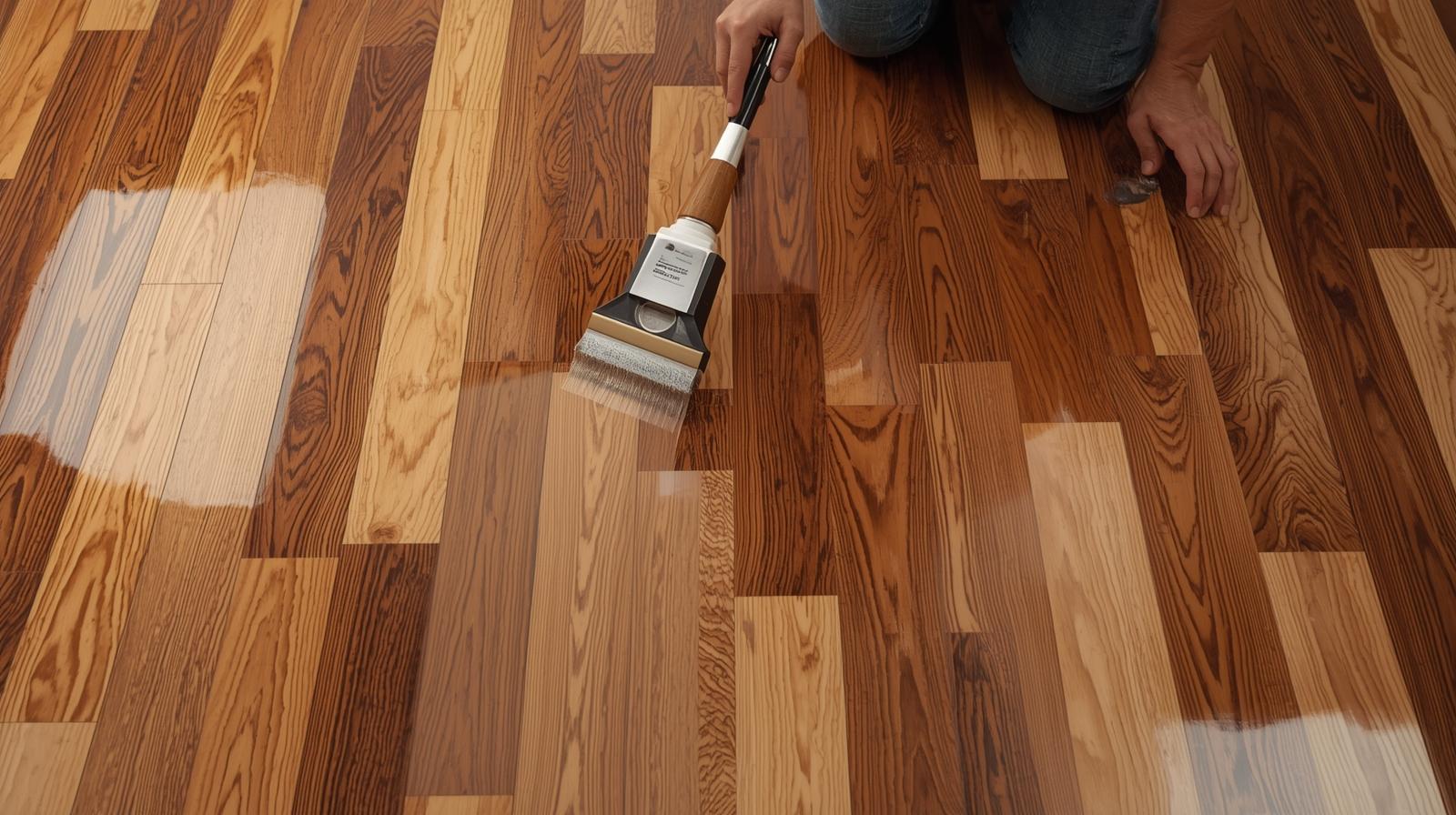
Yes, you can epoxy certain wood floors, but not every wooden surface is suitable for an epoxy coating. The condition of the wood, moisture levels, movement between floorboards, surface preparation, and type of epoxy system all determine whether the coating will perform successfully.
Epoxy is popular for its durability, smooth appearance, stain resistance, and decorative possibilities. However, applying epoxy over wood floors is more complicated than coating concrete. Wood naturally expands, contracts, and sometimes flexes underfoot. If a rigid epoxy coating cannot accommodate that movement, it may crack, peel, or separate from the surface.
For homeowners in Maui, humidity and moisture exposure make proper evaluation particularly important. Before installing an epoxy floor coating for wood, it helps to understand which flooring materials are compatible, what can go wrong, and whether a traditional hardwood finish may be a better choice.
Can You Epoxy Wood Floors Safely?
You can apply epoxy to some wood floors when the substrate is structurally stable, sufficiently dry, properly prepared, and compatible with the manufacturer’s specified coating system.
Epoxy is a resin-based material that typically combines a resin and hardener to form a tough protective coating. Although it is commonly installed over concrete, some specialized epoxy systems can bond to appropriately prepared wooden surfaces.
The main challenge is that wood and cured epoxy behave differently.
Wood absorbs and releases moisture as surrounding conditions change. This causes dimensional movement, including expansion and contraction across the grain. Most conventional floor epoxy coatings are relatively rigid, so they cannot tolerate substantial movement beneath them.
Epoxy flooring over wood is more likely to perform successfully when:
- The wooden substrate is stable and securely fastened.
- There are no active leaks, rot, or persistent moisture problems.
- The floor does not noticeably bend, shift, or flex.
- Existing finishes and contaminants have been properly addressed.
- The chosen primer and epoxy system are approved for the specific wood substrate.
- The installation follows the coating manufacturer’s instructions.
A suitable primer can improve adhesion, but it cannot fix a structurally unstable floor. Likewise, an epoxy coating should never be relied upon to repair damaged floorboards or correct underlying moisture problems.
For traditional hardwood flooring, especially floors with individual moving boards, a conventional wood-floor finish is often the safer long-term option.
Can You Put Epoxy Over Hardwood, Plywood, and Other Wood Floors?
Not all wood floors respond to epoxy in the same way. Before selecting a coating, identify the exact material beneath the existing finish.
| Wood flooring type | Epoxy suitability | Important considerations |
|---|---|---|
| Solid hardwood | Generally not recommended for standard rigid epoxy | Individual boards expand and contract with humidity |
| Engineered hardwood | Usually unsuitable unless specifically approved | Factory coatings, adhesives, and layered construction can create adhesion issues |
| Plywood | Possible with a manufacturer-approved system | Requires a rigid, securely fastened, dry substrate and properly treated seams |
| OSB subfloor | Generally a poor candidate | Swelling, surface irregularities, and panel movement increase failure risk |
| Existing painted wood | Conditional | Old paint must be evaluated for adhesion and compatibility |
| Damaged or rotting wood | Not suitable | Structural and moisture problems must be corrected before considering any coating |
Can You Epoxy Over Hardwood Floors?
Applying epoxy on hardwood floors is technically possible in selected circumstances, but it is not normally recommended for conventional plank flooring.
Solid hardwood is designed to accommodate seasonal movement. Gaps between boards may open or close depending on humidity, and this movement can create stress beneath an epoxy coating.
Problems can include cracks along board joints, coating separation, and difficulty refinishing the hardwood later.
If your objective is to preserve the natural grain and appearance of your hardwood, a high-quality polyurethane or another wood-specific finish will usually be more appropriate.
Can You Apply Epoxy Over Plywood Floors?
Plywood is sometimes a more practical wood substrate for epoxy because its cross-laminated construction provides greater dimensional stability than individual solid wood planks.
However, plywood can still bend, absorb moisture, and move at panel joints.
A successful plywood coating system requires an appropriate grade of plywood, sufficient structural stiffness, secure fastening, compatible primers, and a manufacturer-approved method for treating joints.
Simply rolling standard garage floor epoxy onto an existing plywood surface is not a reliable installation method.
What Are the Pros and Cons of Epoxy Wood Floors?
Epoxy has several attractive qualities, but the potential benefits must be weighed against its limitations on wooden substrates.
Benefits of Epoxy Floor Coatings for Wood
1. Durable surface protection
When installed over a suitable substrate, epoxy creates a tough finish that can resist normal abrasion, stains, and many common household spills.
2. Decorative appearance
Epoxy can produce clear, glossy, solid-color, or other decorative effects. Some systems are designed to highlight the appearance of wood, while others completely cover the underlying surface.
3. Easier routine cleaning
A properly installed smooth coating is generally easier to wipe clean than unfinished wood. Dust, dirt, and minor spills can be removed with suitable nonabrasive cleaning products.
4. Resistance to surface spills
A continuous epoxy film can provide protection against short-term surface moisture exposure. However, this does not make the wood substrate or entire floor assembly waterproof.
5. Customization options
Depending on the approved flooring system, homeowners may have choices involving color, gloss level, decorative finishes, and slip-resistant textures.
Disadvantages of Epoxy Over Wood Floors
1. Cracking from wood movement
The most significant limitation is the difference between wood movement and the relatively rigid epoxy finish.
2. Trapped moisture
Moisture entering from below or through exposed edges can accumulate beneath a low-permeability coating and contribute to swelling, bubbling, or loss of adhesion.
3. Difficult removal
Removing a thick epoxy coating may require aggressive sanding or mechanical preparation that can damage the underlying hardwood.
4. Surface preparation requirements
A successful installation may involve substantial cleaning, sanding, repairs, moisture evaluation, and compatibility testing.
5. Slipperiness
Smooth, high-gloss epoxy can become slippery when wet. Appropriate slip-resistant additives or textures may be necessary.
6. UV discoloration
Some epoxy formulations can yellow or change appearance with sunlight exposure unless protected by a suitable UV-resistant finishing system.
The key takeaway is that epoxy’s performance benefits depend heavily on the substrate. A durable coating cannot compensate for unstable or moisture-damaged wood.
Will Epoxy Damage Wood Floors? Common Risks Explained
Epoxy does not automatically damage wood. However, incorrect application or unsuitable floor conditions can result in expensive repairs and may permanently affect the original flooring.
Here are the main risks to consider.
1. Cracking and Peeling
Wood expands and contracts as its moisture content changes. When an epoxy coating cannot accommodate that movement, cracks may develop, especially near floorboard seams.
Eventually, parts of the coating may peel or separate from the wood.
2. Moisture Trapped Beneath the Epoxy
Wood can absorb moisture from humid air, leaks, damp subfloors, or poorly controlled environmental conditions.
If moisture becomes trapped beneath an impermeable or low-permeability epoxy layer, the flooring may swell or experience adhesion problems.
An epoxy coating is not a substitute for correcting a moisture source.
3. Poor Adhesion to Existing Finishes
Hardwood floors are often coated with polyurethane, wax, oil, varnish, or other finishing products.
These materials can interfere with epoxy adhesion.
Applying resin directly over an incompatible existing finish can cause the new coating to peel, bubble, or fail prematurely.
4. Visible Bubbles and Surface Imperfections
Porous wood may release trapped air during application. Temperature changes, improper sealing, contamination, and incorrect mixing can also cause bubbles or surface defects.
Suitable sealing methods and careful application help reduce these risks.
5. Permanent Changes to Hardwood
Even when epoxy adheres properly, it may significantly alter the original wood floor.
If you eventually want to restore the natural hardwood appearance, removing the epoxy may be expensive or impractical without replacing some flooring materials.
Before coating valuable hardwood, consider whether preserving its future refinishing potential is more important than achieving an epoxy appearance.
How to Epoxy Wood Floors: Step-by-Step Process
If a flooring professional and coating manufacturer determine that your wooden substrate is suitable, the following process outlines the major stages of installation.
These are general steps rather than universal product instructions. Different epoxy systems have different preparation, mixing, application, and curing requirements.
Step 1: Inspect the Wood Floor
Begin with a detailed inspection of the existing flooring.
Check for:
- Loose or squeaking boards
- Visible movement or flexing
- Rot, mold, or water damage
- Cracks, gaps, and uneven surfaces
- Old varnish, wax, paint, or other finishes
- Signs of water intrusion beneath the flooring
Any structural problems must be corrected before the coating process begins.
Step 2: Check Moisture Levels
Use an appropriate wood moisture meter and inspect the conditions beneath the flooring where accessible.
The acceptable moisture content depends on the wood species, environmental conditions, and the coating manufacturer’s specifications.
Do not assume a floor is ready for epoxy simply because its surface feels dry.
If excessive moisture is detected, identify and correct the cause before proceeding.
Step 3: Clean and Prepare the Surface
Remove surface contaminants that could prevent proper adhesion.
Preparation may include cleaning, sanding, and removing incompatible existing finishes.
The required sanding profile depends on the wood and epoxy system. Avoid using generic grit recommendations without checking the manufacturer’s instructions.
For older painted floors, test for lead or other hazardous coatings before disturbing them.
Step 4: Repair Gaps and Damaged Areas
Replace damaged wood, secure loose panels, and repair appropriate surface defects.
Panel joints and expansion gaps require special attention. Do not rigidly fill movement joints unless the manufacturer specifically approves that treatment.
Some flooring assemblies may require a specialized membrane or reinforced system, but these measures do not guarantee compatibility with moving wood.
Step 5: Apply a Compatible Primer
A manufacturer-approved primer helps the epoxy system bond to the prepared substrate.
Wood may absorb primer unevenly, so the correct coverage, recoat window, and application technique are important.
A primer designed for concrete should not automatically be considered suitable for hardwood or plywood.
Step 6: Perform a Test Application
Where appropriate, apply the proposed system to a representative test area.
Check its appearance, adhesion, and compatibility according to the manufacturer’s testing instructions.
A successful test patch does not eliminate future movement-related risks, but it can identify immediate bonding or finish problems.
Step 7: Mix and Apply the Epoxy
Follow the product’s specified mixing ratio, mixing time, working time, and application thickness.
Apply the coating using approved equipment and maintain the recommended temperature, humidity, and ventilation conditions.
Some systems require multiple coats, while others use primers, reinforcement materials, and protective topcoats as part of a complete assembly.
Never mix different brands or products into one system unless their compatibility has been confirmed.
Step 8: Allow Proper Curing
Keep the floor protected while the coating cures.
The time before light foot traffic, furniture placement, or full service depends on the specific products, application thickness, and environmental conditions.
Follow the technical data sheet rather than assuming the floor is fully cured because it feels dry.
For large floors, complicated substrates, or occupied homes, professional installation is generally preferable to an untested DIY application.
What Is the Best Epoxy Floor Coating for Wood?
The best epoxy for wood floors is not necessarily the strongest or thickest product.
It is the system that is specifically approved for the substrate, expected movement, indoor environment, and intended use.
When comparing products, consider the following factors.
Wood Substrate Compatibility
Choose a product whose manufacturer explicitly identifies the relevant wood material as an acceptable substrate.
An epoxy marketed primarily for concrete garage floors should not be used over hardwood without written technical confirmation.
Primer and Coating System
Look for a complete compatible system rather than choosing individual products based only on price.
Depending on the application, the manufacturer may require a particular primer, reinforcement layer, or specialty coating.
Clear or Pigmented Finish
Clear epoxy resin for wood floors may highlight the existing material, while pigmented coatings can hide the wood grain and provide a solid-color appearance.
Clear coatings may also expose existing scratches, uneven staining, seams, or imperfections.
UV Resistance
For rooms receiving significant direct sunlight, consider whether the system needs a UV-resistant topcoat.
Not all clear epoxy products maintain the same color or clarity during prolonged UV exposure.
Slip Resistance
A highly polished coating may not provide suitable traction in kitchens, entryways, or other areas exposed to water.
Discuss appropriate texture and slip-resistance requirements before choosing a finish.
Indoor Air Quality and Application Conditions
Check the product’s safety documentation, ventilation requirements, and applicable emissions information.
The product must also be compatible with the expected installation temperature and humidity.
Important: A product sold as “epoxy resin for wood” may be intended for furniture, countertops, or artwork rather than floors. Always verify that it is approved for flooring traffic and the actual substrate.
Epoxy vs. Polyurethane for Wood Floors: Which Is Better?
For homeowners who want to protect an existing hardwood floor, comparing epoxy and polyurethane is an important step.
| Feature | Epoxy coating | Wood-floor polyurethane |
|---|---|---|
| Typical application | Specialized coating systems, often used on concrete | Traditional hardwood floor finishing |
| Appearance | Clear, glossy, colored, or decorative | Clear finishes in several sheen levels |
| Flexibility | Generally rigid | Usually better suited to normal wood-floor movement |
| Wood compatibility | Depends on specific product and substrate | Designed for suitable hardwood floors |
| Moisture protection | Resists surface spills but may trap moisture | Resists everyday surface spills but is not waterproof |
| Repair and refinishing | Often difficult to remove | Commonly supports established refinishing procedures |
| Best choice | Suitable, stable substrates with an approved system | Most conventional residential hardwood floors |
When Should You Choose Polyurethane?
Polyurethane is generally the more practical option when the main goal is protecting existing hardwood while preserving its natural appearance.
Wood-floor polyurethane products are designed for the demands of hardwood flooring and are available in different finishes, including matte, satin, semi-gloss, and gloss.
They are not immune to scratching or moisture damage, but they are usually better suited to the intended application than a conventional rigid epoxy coating.
When Might Epoxy Be Worth Considering?
A specialized epoxy flooring system may be worth evaluating when:
- The floor is a stable, appropriately constructed plywood substrate.
- A particular decorative or protective coating is required.
- The manufacturer approves the system for the intended wood application.
- Subfloor movement and moisture have been properly assessed.
- Future hardwood refinishing is not a priority.
If your project involves a concrete floor rather than wood, explore our residential epoxy flooring services in Maui for coating options designed around that substrate.
How Much Does It Cost to Epoxy a Wood Floor?
The cost of applying epoxy over wood floors varies substantially because many wooden substrates require more preparation than concrete.
The final price depends on several factors.
Floor condition: Loose boards, water damage, and uneven surfaces may require repairs before coating.
Floor construction: A stable plywood assembly may need different preparation than an existing hardwood floor.
Existing finish removal: Removing wax, paint, varnish, or other incompatible coatings adds time and labor.
Moisture problems: Testing, investigation, and correcting moisture sources can affect the total project budget.
Coating system: Specialized primers, reinforcement materials, slip-resistant finishes, and UV-protective topcoats increase material requirements.
Project size and accessibility: Small, complicated rooms may have a higher cost per square foot than larger open areas.
Labor and local conditions: Material availability, project location, and qualified installation labor also influence pricing.
Because wood substrates vary widely, there is no reliable universal price per square foot for epoxy over wood.
For an accurate budget, request an assessment that separates preparation, repairs, coating materials, and installation labor.
If major structural work is required, replacing the existing surface or installing a suitable alternative floor may be more economical than trying to preserve it beneath epoxy.
Is Epoxy Suitable for Wood Floors in Maui’s Humid Climate?
Maui’s environmental conditions deserve special consideration when evaluating epoxy over wood flooring.
Conditions vary across the island, including coastal properties, windward locations, and higher-elevation communities. Humidity, rainfall exposure, ventilation, and the construction of the building can all affect how wood floors perform.
Humidity and Wood Movement
Wood exchanges moisture with its surrounding environment. When indoor humidity changes, the moisture content and dimensions of wooden boards can change.
This movement matters because rigid epoxy coatings may not tolerate repeated expansion and contraction.
In humid homes, controlling indoor moisture and evaluating the flooring’s condition are essential before choosing a coating system.
Coastal Homes and Moisture Exposure
Homes near the coast may experience humid air, wind-driven rain, and salt exposure.
Salt air alone does not determine epoxy compatibility, but coastal building conditions can contribute to moisture-related maintenance challenges.
A coating should not be used to conceal active leaks, persistent dampness, or deteriorating wood.
Raised Floors and Subfloor Ventilation
Some homes have raised wooden floor systems or crawlspaces beneath the living area.
Moisture conditions below the flooring can be just as important as conditions inside the room.
A professional assessment should consider the subfloor, ventilation, evidence of water intrusion, and the complete floor assembly.
Sunlight and Finish Appearance
Large windows and bright natural light may expose interior floors to significant ultraviolet radiation.
If a clear epoxy finish is being considered, check whether the proposed system has adequate UV stability or requires a compatible protective topcoat.
For Maui homeowners, the priority should be moisture management and substrate stability before selecting a decorative floor finish.
How Long Does Epoxy Last on Wood Floors?
There is no guaranteed lifespan for epoxy installed over wood.
Durability depends on the substrate, installation quality, coating chemistry, moisture conditions, traffic, and ongoing movement.
A suitable system installed over stable, dry plywood may perform differently from conventional epoxy applied over individual hardwood planks.
Premature failures may occur when:
- The wood continues to move beneath the coating.
- Moisture reaches the substrate from below.
- The existing finish prevents proper adhesion.
- The coating is applied too thickly or incorrectly.
- The floor experiences traffic beyond the system’s intended use.
Instead of relying on a general lifespan estimate, ask the installer or manufacturer about the coating’s approved application, limitations, maintenance requirements, and warranty coverage.
How to Maintain an Epoxy-Coated Wood Floor
If epoxy is successfully installed on a suitable wooden floor, maintenance should follow the manufacturer’s recommendations.
Generally, good practices include:
- Removing sand, dirt, and grit regularly.
- Cleaning spills promptly.
- Using appropriate mild cleaning products.
- Avoiding harsh abrasives or unauthorized chemicals.
- Using furniture pads to reduce scratching.
- Monitoring joints and edges for signs of cracking or coating separation.
- Addressing water intrusion immediately.
If bubbling, peeling, or unusual floor movement appears, investigate the underlying cause rather than simply applying another coat of epoxy.
Should You Epoxy Your Existing Wood Floor? A Quick Checklist
Before making a decision, consider these questions:
- Is the floor structurally sound? A moving or damaged substrate is not a suitable starting point.
- Is the wood dry? Moisture conditions should be measured and evaluated.
- What type of wood flooring do you have? Solid hardwood, engineered wood, and plywood have different risks.
- Does the existing finish need removal? Wax, polish, paint, and varnish may prevent proper bonding.
- Is the coating approved for wood floors? Product compatibility must be verified.
- Do you want to preserve the original hardwood? Epoxy removal may damage it.
- Would a conventional wood-floor finish achieve the same goal? Polyurethane may be more suitable and practical.
If several of these questions remain unanswered, do not proceed with epoxy installation until the floor has been properly assessed.
Frequently Asked Questions About Epoxy Wood Floors
Can you put epoxy directly over hardwood floors?
Epoxy can bond to some prepared wooden surfaces, but applying standard rigid epoxy directly to hardwood is generally not recommended. Hardwood expands and contracts with humidity, which can cause cracks and coating separation. A wood-specific finish is usually a safer option.
Will epoxy damage existing wood floors?
Epoxy may permanently change the appearance and refinishing options of a wood floor. Incompatible coatings, moisture, or movement can also lead to peeling, cracking, and damage during eventual removal. Proper evaluation reduces risks but cannot guarantee a damage-free outcome.
Can you use garage floor epoxy on wood?
Most conventional garage floor epoxy systems are intended for prepared concrete. Do not apply them to wood unless the manufacturer specifically approves the substrate and provides appropriate installation instructions.
What is the best epoxy resin for wood floors?
The best option is a complete flooring system that the manufacturer approves for your specific wood substrate and expected traffic. Products intended for art, furniture, or countertops should not automatically be treated as suitable flooring coatings.
Can you epoxy over painted wood floors?
It may be possible with certain systems, but the existing paint must be sound, clean, and compatible with the coating. Old finishes often need to be removed. A professional should confirm adhesion and product compatibility before application.
How long does epoxy take to cure on wood floors?
Curing time depends on the specific epoxy formulation, coating thickness, temperature, and humidity. The time before foot traffic may be shorter than the time required for full chemical cure. Always follow the manufacturer’s technical instructions.
Is epoxy better than polyurethane for hardwood floors?
Usually not for conventional hardwood flooring. Polyurethane products designed for wood floors are generally better suited to normal wood movement and refinishing requirements. Epoxy may be considered for specialized applications with an approved coating system.
Can epoxy be removed from a wood floor?
Epoxy can sometimes be mechanically removed, but the process can be difficult and may damage the wood underneath. Removing a thick coating from traditional hardwood may reduce the material available for future sanding and refinishing.
Final Verdict: Can You Put Epoxy on Wood Floors Without Damage?
Epoxy can be used on certain wooden floors, but suitability depends on much more than surface preparation alone.
The most important considerations are the flooring material, structural stability, moisture levels, expected movement, and compatibility of the complete coating system.
For conventional solid hardwood floors, a high-quality wood-specific finish is usually the better long-term choice. For stable plywood and other specialized wood substrates, an approved epoxy flooring system may be possible after proper evaluation.
In Maui, taking humidity, subfloor moisture, and building conditions into account is especially important.
If you are considering epoxy for your home or business, Maui Epoxy Solutions can help you explore appropriate flooring options and determine whether a professional assessment is needed.
Learn more about our residential epoxy flooring services or contact Maui Epoxy Solutions to discuss your flooring project.
The right flooring solution begins with understanding the surface beneath it, not simply selecting the most durable-looking coating.