

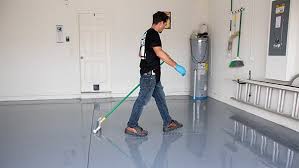
The garage is often the most overlooked room in the house. It handles heavy vehicles, chemical spills, dropped tools, and fluctuating temperatures. Yet, many homeowners leave the concrete bare, leading to cracks, stains, and endless dust. This is why epoxy coatings have exploded in popularity. They turn a dusty concrete slab into a durable, showroom-quality extension of your living space.
Once you decide to upgrade, however, you face a significant design choice: the finish. While there are many garage floor epoxyoptions, the two main contenders are the decorative chip system (flake) and the monochromatic system (solid).
Choosing between an epoxy garage floor flake vs solid color finish isn’t just about aesthetics; it impacts maintenance, safety, and long-term durability. In this guide, we will break down the differences to help you make the right investment for your property.
What Is an Epoxy Garage Floor?
Before diving into the visual styles, it is important to understand what lies beneath. An epoxy floor coating is not paint. It is a thermosetting resin that is applied as a liquid. When mixed with a hardener, it cures into a tough, plastic-like surface that bonds tenaciously to the concrete substrate.
Epoxy offers several key benefits over bare concrete:
- Durability: It resists impacts, chipping, and surface abrasion.
- Chemical Resistance: Oil, brake fluid, anti-freeze, and gasoline can be wiped up without staining the floor.
- Hygiene: It seals the porous concrete, preventing dust generation and making cleaning significantly easier.
- Appearance: It transforms a dull, gray slab into a bright, professional-looking surface.
Both flake and solid color systems use this resin technology, but they differ in how they are layered and finished.
What Is a Flake Epoxy Finish?
A flake epoxy garage floor, often called a chip system, creates a terrazzo-like appearance. During installation, while the base coat of epoxy is still wet, vinyl chips (flakes) are broadcast into the surface. These flakes can be sparsely applied or, more commonly, broadcast to “full rejection,” meaning the floor is completely covered in chips.
Once the epoxy cures, the excess flakes are scraped off, and a clear, UV-stable topcoat (often polyaspartic or polyurethane) is applied over the top to seal the chips in.
The Aesthetics
This finish offers a multi-tonal, textured look. The flakes come in endless color blends—grays, blues, tans, reds, and blacks—allowing you to match your car, your sports team, or your home’s exterior.
Pros
- Hides Imperfections: This is the biggest advantage. The busy pattern hides cracks, pits, and uneven concrete textures effectively.
- Camouflages Debris: Dirt, dust, leaves, and dried mud blend into the multi-colored pattern, so the floor looks clean even when it isn’t.
- Enhanced Grip: The texture of the flakes, combined with the topcoat, naturally provides better slip resistance than a smooth surface.
- UV Stability: The vinyl flakes and the clear topcoat generally resist yellowing better than standard epoxies.
Cons
- Small Parts Retrieval: If you drop a small screw or washer, finding it against the camouflaged background can be frustrating.
- Cost: Due to the extra materials (flakes and clear coat) and labor involved, this is usually the more expensive option.
Best Use Cases
This is the best epoxy finish for garage environments that see heavy foot traffic, active DIY projects, or families with kids and pets who might track in dirt.
What Is a Solid Color Epoxy Finish?
A solid color epoxy floor is exactly what it sounds like: a single, uniform color applied across the entire garage. This system usually consists of a tinted primer, a tinted base coat, and optionally, a clear protective topcoat.
The Aesthetics
Solid colors provide a sleek, industrial, and modern look. High-gloss options can dramatically brighten a garage by reflecting overhead lighting. Common colors include light gray, medium gray, beige, and tan, though bold colors like racing red or safety yellow are possible.
Pros
- Bright and Clean: The high light reflectivity makes dark garages feel larger and more inviting.
- Easy Small Part Retrieval: If you drop a contact lens or a tiny screw, you will spot it immediately against the solid background.
- Lower Cost: With fewer materials required (no flakes) and a slightly simpler application process, solid color floors are generally more budget-friendly.
- Easy to Patch: If the floor gets deeply gouged, patching a solid color is easier than trying to match a specific flake distribution pattern.
Cons
- Shows Everything: Tire marks, dust, footprints, and scratches are highly visible on a solid, glossy surface.
- Highlights Concrete Flaws: If your concrete has waves, divots, or patches, a glossy solid color will reflect light in a way that highlights these imperfections.
- Slippery When Wet: Without an added anti-slip aggregate (grit), a solid epoxy floor can be like an ice rink when it rains or snows.
Best Use Cases
Solid finishes are ideal for showroom-style garages, homeowners on a strict budget, or workshops where visual clarity (finding small parts) is a priority over hiding dirt.
Durability & Performance Differences
When analyzing the epoxy garage floor flake vs solid color debate, performance is just as important as looks.
Impact Resistance
A full-flake floor is physically thicker than a solid color floor. You have the base coat, the layer of vinyl chips (which adds thickness and cushions impact), and the clear topcoat. This creates a “sandwich” that is slightly more resistant to dropped tools or heavy equipment than a standard two-coat solid system.
Hot Tire Pickup
Both systems, if installed professionally using high-quality materials (100% solids epoxy), resist hot tire pickup—where hot tires peel the coating off the concrete. However, cheap DIY kits in either style are prone to this failure.
Chemical Resistance
Both systems offer excellent chemical resistance. However, if a harsh solvent sits on the floor for a long time, it is less likely to cause visible discoloration on a flake floor because the busy pattern masks slight staining. On a solid color floor, a chemical stain will stand out like a sore thumb.
UV Exposure
Epoxy naturally ambers (turns yellow) when exposed to sunlight. In a solid color system, this yellowing shifts the color of your floor (e.g., gray turns greenish-yellow). In a flake system, the base coat is covered by chips, and the topcoat is usually a polyaspartic or urethane, which is UV stable. Therefore, flake floors maintain their color integrity much longer in garages with windows or doors left open.
Maintenance & Cleaning
The maintenance requirements for these two finishes are surprisingly different.
The “Hiding” Factor:
A flake floor is the master of disguise. You could go weeks without sweeping, and the floor would still look relatively presentable because the dust blends in with the gray, black, and white chips. A solid color floor demands attention. A single set of muddy tire tracks or a pile of sawdust will look messy immediately.
The “Cleaning” Factor:
While the solid floor shows more dirt, it is technically smoother to mop. The flake floor has a slight orange-peel texture. While this is great for grip, it can sometimes snag a cotton mop. We recommend using a foam squeegee or a soft-bristle broom for cleaning flake floors to get the best results.
Recoating:
Years down the road, if the floor dulls, a solid color floor usually needs to be sanded and recoated with color. A flake floor simply needs a light sanding and a fresh layer of clear topcoat to look brand new again.
[See our guide on “How to Clean and Maintain Your Epoxy Floor”]
Cost Comparison
For many homeowners, the decision comes down to the budget.
A solid color epoxy floor is the entry-level professional option. It requires less material and less labor time. If you are looking for the most cost-effective way to seal your concrete and stop dusting, this is the solution.
A decorative garage floor coating with full flake broadcast will typically cost 15% to 30% more than a solid color version. This cost covers the boxes of vinyl flakes (which are sold by the pound) and the labor-intensive process of broadcasting the flakes, letting them dry, scraping the floor smooth, and vacuuming before applying the final clear coat. However, many find the long-term value—specifically the fact that you don’t have to clean it as often—worth the upfront cost.
Which One Should You Choose?
Still on the fence? Here are our specific recommendations based on common scenarios:
Choose a Flake Finish If:
- You have a busy family: Kids, bikes, and sports gear mean scratches and dirt. Flake hides it all.
- Your concrete is ugly: If your slab has many cracks or pitting, the flake texture will mask these flaws perfectly.
- You live in a wet climate: The natural texture provides essential safety against slipping during rain or snow.
- You want low maintenance: You prefer not to sweep or mop the garage every single weekend.
Choose a Solid Color Finish If:
- You want a “Showroom” look: You have a classic car and want a pristine, mirror-like floor to reflect the vehicle.
- You do precision work: You use your garage as a workshop for electronics or small engine repair and need to find dropped parts easily.
- You are budget-conscious: You want the protection of epoxy but need to keep renovation costs down.
- You are listing a rental: You want a clean, upgraded look for tenants without the higher investment of a decorative system.
Conclusion
Ultimately, the battle of epoxy garage floor flake vs solid color has no single winner; it depends entirely on your lifestyle and your garage’s condition.
The solid color finish offers a sleek, modern, and budget-friendly solution for those who don’t mind a little extra cleaning. The flake finish offers a premium, textured, and highly durable surface that hides dirt and concrete imperfections, making it the preferred choice for active households.
Whichever path you choose, moving away from bare concrete will increase your home’s value and make your garage a cleaner, more enjoyable space.
Ready to transform your garage? Stop guessing and start planning. Contact us today for a free consultation and estimate on your new floor coating.
Frequently Asked Questions
- Is a flake epoxy floor stronger than a solid color floor?
generally, yes. A full-flake system is thicker because it includes the base coat, a layer of vinyl chips, and a robust clear topcoat. This “sandwich” effect provides slightly better impact resistance against dropped tools than a standard solid color coating. - Can I apply a flake finish over an existing solid epoxy floor?
Yes, but surface preparation is key. The existing solid floor must be sanded aggressively to create a mechanical bond. Then, a fresh base coat is applied, followed by the flake broadcast and a new topcoat. - Are solid color epoxy floors slippery?
They can be. A high-gloss solid epoxy surface is non-porous and becomes very slick when wet. If you choose a solid color, we highly recommend asking your installer to mix a non-slip aggregate (grit) into the final coat to improve traction. - Does a flake floor cost significantly more than a solid color?
You can expect to pay about 15% to 30% more for a flake floor. The increased cost covers the vinyl chips and the additional labor required to broadcast, scrape, and seal the floor.
5. Which epoxy finish is best for old, cracked concrete?
The flake finish is far superior for old concrete. While epoxy can fill cracks, “ghosting” (where the crack repair is visible through the coating) can happen with solid colors. The chaotic pattern of a flake floor effectively camouflages these repairs.